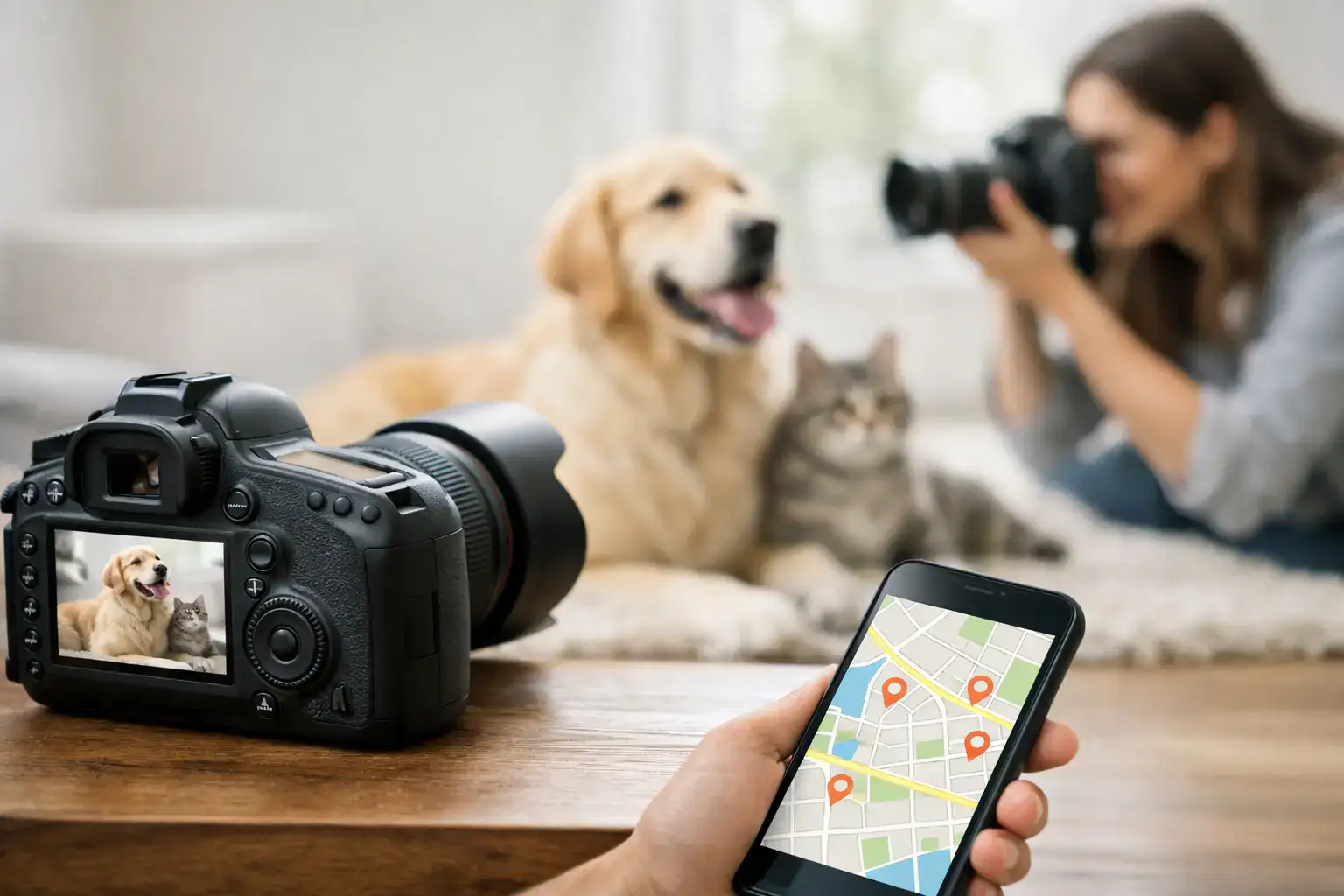
Type pet photography near me into a search bar and you will usually be met with smiling dogs, polished websites and plenty of promises. What matters far more is how a photographer makes your pet feel, and how that translates into photographs that still feel true years from now.
A good pet portrait is never only about a well-timed click. It is about patience, observation and knowing when to let a moment unfold rather than forcing it. If you are looking for someone to photograph your dog, cat or another much-loved companion, the best choice is rarely the cheapest or the closest. It is the photographer who can create a relaxed experience and turn your pet’s personality into something tangible – a print on the wall, an album on the shelf, a memory you can return to.
What to look for in pet photography near me
When people begin searching for pet photography near me, they often start with style. That makes sense. Some photographers lean towards bright, playful portraits with clean backdrops. Others prefer outdoor sessions with softer light and a more natural feel. Neither is automatically better. It depends on what suits your pet and what you want to live with in your home.
For many owners, the most meaningful photographs are the ones that feel unforced. A dog racing through long grass, ears flying. A senior Labrador resting his head in your lap. A cat sitting in its favourite patch of window light, perfectly content and entirely unimpressed by the camera. These are not generic pet portraits. They are small pieces of your life together.
That is why experience matters. Pets do not perform on command simply because a booking has been made. Some are energetic, some are cautious, and some decide that the whole thing is beneath them. A photographer who is comfortable around animals will work with that, not against it. They will know when to wait, when to engage, and when to keep the session moving so your pet does not become overwhelmed.
Style matters, but so does temperament
A portfolio can tell you a great deal, but it does not tell you everything. It shows the finished image, not the experience of getting there. When choosing a photographer, look for signs that they understand more than camera settings and flattering angles.
Do the animals in their photographs look comfortable? Do expressions feel natural rather than over-managed? Can you see variety, or does every image feel built from the same formula? A photographer who creates thoughtful, story-led images will usually show more than one kind of pet personality. Some portraits may be lively and playful, while others are quieter and more reflective.
This matters because your pet is not a prop. A nervous rescue dog may need a gentler pace and more space. An excitable spaniel may need room to run before settling. An older pet may not manage a long walk or repeated repositioning. A good photographer adapts the session around the animal, rather than trying to fit the animal into a rigid plan.
Where the session should happen
One of the biggest decisions is location. Studio portraits can be beautiful, especially if you love a clean, timeless look with full focus on your pet’s features and expression. Outdoor sessions often feel more relaxed and personal, particularly for dogs who are happiest exploring familiar paths, fields or woodland tracks.
There is no single right answer. It depends on temperament, practicalities and the kind of images you want. A highly distracted dog may struggle in a busy public park but thrive in a quieter spot. A cat may be far more comfortable at home. A beloved older dog may suit a gentle garden session better than a longer outing.
If you are in the Scottish Borders, Edinburgh, the Lothians or Northumberland, the landscape offers wonderful variety, but beautiful scenery should never overshadow the subject. The setting should support the story, not steal from it. A thoughtful photographer will help you choose a place with good light, manageable distractions and enough space for your pet to relax.
Questions worth asking before you book
You do not need to interview a photographer like a solicitor, but a few clear questions can save disappointment later. Ask how they work with nervous or excitable animals. Ask what happens if your pet needs breaks, or if the weather turns. Ask whether family members can join for a few photographs too, because often the most cherished images are the ones that show the relationship, not just the pet alone.
It is also worth asking what happens after the session. Many people focus entirely on digital files, then leave the photographs sitting on a hard drive. There is nothing wrong with wanting digital images, of course, but pet portraits often deserve more than a quick post on social media. A framed print, a folio box or a small album gives those moments a proper place in everyday life.
That is where a premium experience often differs from a budget one. You are not only paying for a session. You are investing in care, consistency and finished artwork that does justice to the memories attached to it.
The trade-off between price and value
Pet photography pricing can vary widely, and it is tempting to compare photographers line by line. The trouble is that two packages which look similar on paper may deliver very different experiences.
A lower price can be absolutely fine if expectations are simple and the work is strong. But cheaper sessions sometimes allow very little time, offer minimal guidance or leave you to sort printing yourself. That may suit some people. Others would rather have more support, more choice and more confidence that the final photographs will be beautiful in print as well as on screen.
Value is not only about quantity. Ten thoughtful images that feel deeply personal are worth more than fifty that all look the same. The right photographer understands that these photographs may become especially precious with time. Pets change quickly. Puppies grow. Grey muzzles appear. Favourite routines disappear before we quite realise they are becoming memories.
Preparing your pet without making it stressful
The best preparation is usually the simplest. Let your pet have a chance to settle before the camera appears. Bring water, treats and anything that helps them feel secure. If your dog has a favourite lead, blanket or toy, that can be useful, though it is wise to choose items you would be happy to see in some of the photographs.
Try not to put too much pressure on perfection. Pets do not need to sit immaculately and stare at the lens to create meaningful portraits. Very often, the in-between moments are the strongest ones – the head tilt, the muddy paws, the glance back towards you. These details are part of who they are.
For owners, the most helpful thing is often to stay calm. Animals pick up on tension quickly. If you are relaxed, your pet is more likely to be as well. A good photographer will guide you gently and keep the experience light, even if your dog decides that sniffing every blade of grass is the true priority of the day.
Why natural photographs last longer emotionally
Trends come and go in photography just as they do everywhere else. Certain edits, props or poses may look fashionable for a while, then date quickly. The images that tend to endure are the ones rooted in connection.
That might mean a simple portrait with beautiful light and honest expression. It might mean your child hugging the family dog. It might mean a well-loved terrier trotting beside you on a familiar path. These photographs work because they carry feeling. They are not trying too hard.
This is where a story-led approach makes a real difference. Rather than collecting a series of isolated poses, the photographer notices the bond between you and your pet. The trust. The routines. The tiny looks and habits you would recognise anywhere. Graeme Webb Photography approaches pet sessions in this spirit – creating relaxed, heartfelt images that feel authentic first and polished second.
Choosing someone local can be a real advantage
There is a practical comfort in working with someone nearby. They may already know suitable locations, understand the local light and weather, and be able to suggest quieter places for dogs who do not enjoy busy surroundings. Local reputation matters too. In a service built on trust, word of mouth still counts for a great deal.
Just remember that near me should not mean nearest available at any cost. Convenience is helpful, but connection matters more. If the photographer’s work feels impersonal, or if the experience sounds rushed, it may not give you the kind of portraits you are hoping for.
The right pet photographer will make space for personality, unpredictability and affection. They will understand that these are not simply lovely pictures of an animal. They are photographs of companionship, routine and a bond woven quietly into daily life.
And that is worth taking your time over, because one day the image you nearly postponed may become one of the things you treasure most.