A wedding photograph can bring back more than the look of a day. It can return you to the squeeze of a hand before the ceremony, the laughter during speeches, or the quiet breath you took together when everything finally slowed down. When couples ask about candid vs posed wedding photography, what they are often really asking is: will we still feel like ourselves in our photographs?
The good news is that you do not have to choose one approach and abandon the other. The most meaningful wedding collections usually make room for both. Candid images carry the energy and emotion of the day as it unfolds. Relaxed, gently guided portraits give you beautiful photographs of the two of you, your nearest people and the details you have worked so hard to choose.
What candid wedding photography really captures
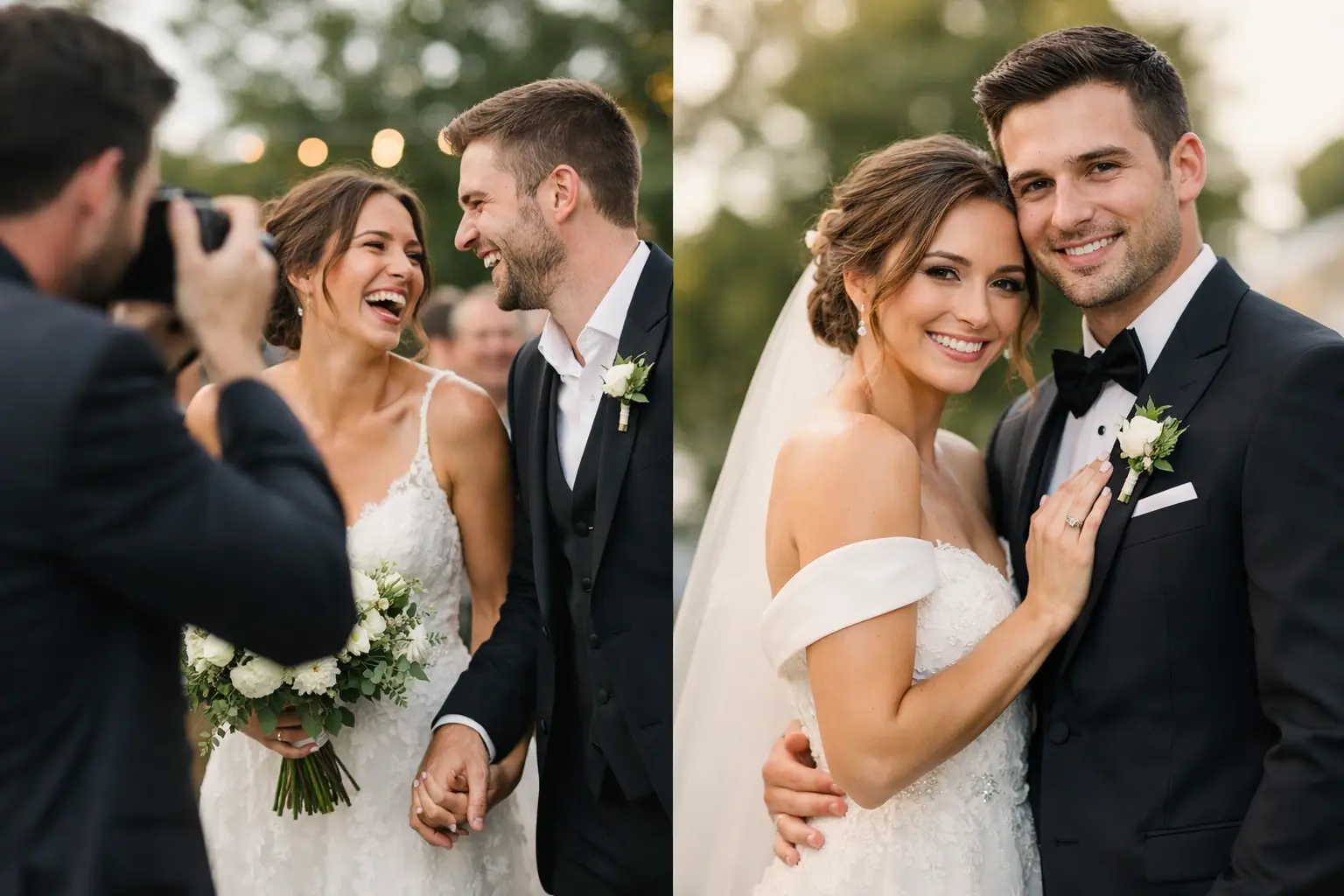
Candid photography is about noticing rather than directing. It is the moment your dad sees you ready for the first time, the glance between you and your partner during the ceremony, a flower girl losing herself on the dance floor, or your friends laughing so hard they forget the camera is there.
These images are not simply unplanned snapshots. They take anticipation, awareness and a photographer who understands where the important moments are likely to happen. On a wedding day, emotion moves quickly. A reassuring hand on a shoulder, a tear quietly wiped away, the wide grin after the confetti – these are often gone in seconds.
For many couples, candid images become the photographs they return to most. They reveal parts of the day you could not possibly have seen yourselves. While you are speaking to guests, walking down the aisle or taking a few moments alone, your story is still unfolding around you.
Candid work also helps the day feel less like a photoshoot. You can be present with your guests, enjoy your meal and celebrate without being repeatedly pulled away. This is especially valuable if being photographed makes you feel a little self-conscious. The camera is there, but it does not need to become the main event.
The honest trade-off
Purely candid coverage has its limits. If nobody steps in to bring key family members together, it is easy to miss the photograph Gran has been hoping for. Without a little direction, a beautiful setting may go unused, and you may not have a clear, flattering portrait of the two of you looking towards the camera.
Candid does not mean careless. It means allowing real life to lead while making thoughtful decisions about light, timing and the people who matter most.
Why posed photographs still have a place
The word “posed” can bring to mind rigid smiles, awkward hands and endless instructions. It does not have to mean any of those things. At its best, posed wedding photography is simply guided. You are given enough direction to feel comfortable and look your best, then encouraged to connect with each other rather than perform for the camera.
A good portrait session might involve standing in lovely light, walking together for a minute, sharing a quiet thought or looking at each other rather than trying to hold a fixed smile. The result can feel natural, elegant and unmistakably you.
There is a practical side, too. Formal family photographs matter. They are often among the few images that bring generations together in one frame, and they can become treasured keepsakes long after the wedding. A framed photograph of parents, siblings and grandparents is not always the image that earns the biggest reaction online, but it may mean the most in ten or twenty years.
Couple portraits are equally worth protecting time for. Your wedding day moves quickly, particularly with a busy guest list. A short, unhurried window gives you time to be together, take in what has just happened and create artwork that deserves a place on your wall or in your album.
The honest trade-off
Portraits can feel uncomfortable if they are over-managed or allowed to run on too long. Nobody wants to spend the best part of their reception standing in a field while their guests wonder where they have gone. The answer is not to skip portraits altogether, but to keep them purposeful, relaxed and well planned.
Ten calm minutes at the right point in the day can be far more valuable than an hour of complicated posing. In the Scottish Borders, Edinburgh, the Lothians and Northumberland, the weather can also change its mind quickly. A flexible photographer will work with the available light, find shelter when needed and make the most of a break in the clouds rather than chasing a rigid timetable.
Candid vs posed wedding photography: the best choice is often both
For most weddings, the strongest approach is a thoughtful balance. Think of candid photographs as the heartbeat of your gallery and guided portraits as the pages you will want to display, print and pass on.
The ceremony, drinks reception, speeches and dancing naturally lend themselves to documentary coverage. These are the times when your guests are interacting freely and when the most genuine reactions appear. A photographer can work quietly, watching for the small moments as well as the obvious ones.
Family groups benefit from gentle organisation. It helps to make a short list in advance, beginning with the combinations that are most important to you. Keeping it focused means your loved ones are not waiting around, and you can get back to enjoying the celebration.
Portraits of the two of you sit somewhere in the middle. They are planned, but they should not feel staged. You may be guided to a good location or asked to turn slightly towards the light, but the warmth in the image comes from your connection. There is no need to know what to do with your hands or to have practised poses in the mirror. That is part of the photographer’s job.
How to decide what balance feels right for you
Start by looking beyond individual images. When you browse a photographer’s work, ask whether you can imagine living inside the wedding day shown. Do people look at ease? Are there real expressions as well as polished portraits? Can you see the relationships between family and friends, not just the venue décor?
Then consider your own priorities. If you would rather spend every spare minute with guests, you may want a largely candid approach with a brief portrait session. If the setting is a major part of your plans, or you have always pictured a fine-art image on your wall, build in a little more time for portraits. Neither preference is more correct.
It also helps to tell your photographer about the people and moments that matter. Perhaps a parent is nervous about being photographed, a grandparent cannot stand for long, or your closest friend has travelled from the other side of the world. These small details allow the photography to feel personal rather than generic.
Your timeline makes a difference too. If possible, allow breathing room after the ceremony and before dinner. Even a small buffer means there is less pressure if group photographs take a few minutes longer, the weather shifts, or you simply want to greet everyone properly.
Feeling relaxed in front of the camera
Almost every couple says some version of, “We are awkward in photos.” It is a perfectly normal feeling, especially when photographs matter as much as wedding photographs do. You do not need to become confident performers overnight.
The right experience begins with trust. A wee chat before the day can clarify what you are worried about, what you love in photographs and how much direction you would like. On the day itself, clear, calm guidance makes a great difference. You should never be left wondering what you are meant to do, but neither should you feel as though you are following a script.
Focus on each other. Talk, laugh, take a breath, and let the day be what it is. Some of the loveliest portraits happen in the seconds between instructions, when you forget the camera and remember why you are there.
Think beyond the gallery
When deciding between candid and posed images, picture how the photographs will live after the wedding. A candid image of your mum laughing during the speeches may become the page in your album that stops you in your tracks. A beautifully composed portrait may become a framed piece of wall art in your home. The formal family photograph may be the one a relative treasures most.
A varied collection gives your memories room to breathe. It holds the grandeur of the day, but also the tiny gestures that made it yours. Choose a photographer whose work makes you feel comfortable, understood and excited to be yourselves. The best photographs are not about perfect poses or perfect timing – they are about giving you space to feel every part of the day, while someone trusted preserves it for you.