A well-run event has a particular feeling in the room: the first welcomes over coffee, the concentration during a speaker’s key point, the laughter between colleagues and the quiet pride when a team’s hard work comes together. Corporate event photography should preserve that feeling, not simply prove that people attended.
For businesses across the Scottish Borders, Edinburgh, the Lothians and Northumberland, strong event images become far more than a record of one date in the diary. They give future clients a sense of your people, support your marketing long after the chairs are packed away, and show the care behind the experience you create.
Why Corporate Event Photography Matters
An event takes time, budget and a considerable amount of organisation. Whether it is a conference, awards evening, networking breakfast, product launch or team celebration, the photography should carry that investment forward. Thoughtful images can be used across your website, social media, press coverage, internal communications and future event promotion.
More importantly, photographs shape perception. A bright, welcoming room, engaged guests and genuine conversations communicate confidence in a way that a stock image rarely can. For prospective customers, partners and new recruits, those details make a business feel real.
The best coverage also gives your team something personal to hold on to. Recognition matters. A photograph of a colleague receiving an award, a founder addressing the room or a team sharing a well-earned moment can become part of the story of your organisation.
Start With the Story You Want to Tell
Before discussing cameras or shot lists, consider the purpose of the event. Are you bringing industry leaders together? Thanking loyal staff? Launching something new? Raising funds for a cause close to your business? The answer guides every photographic decision.
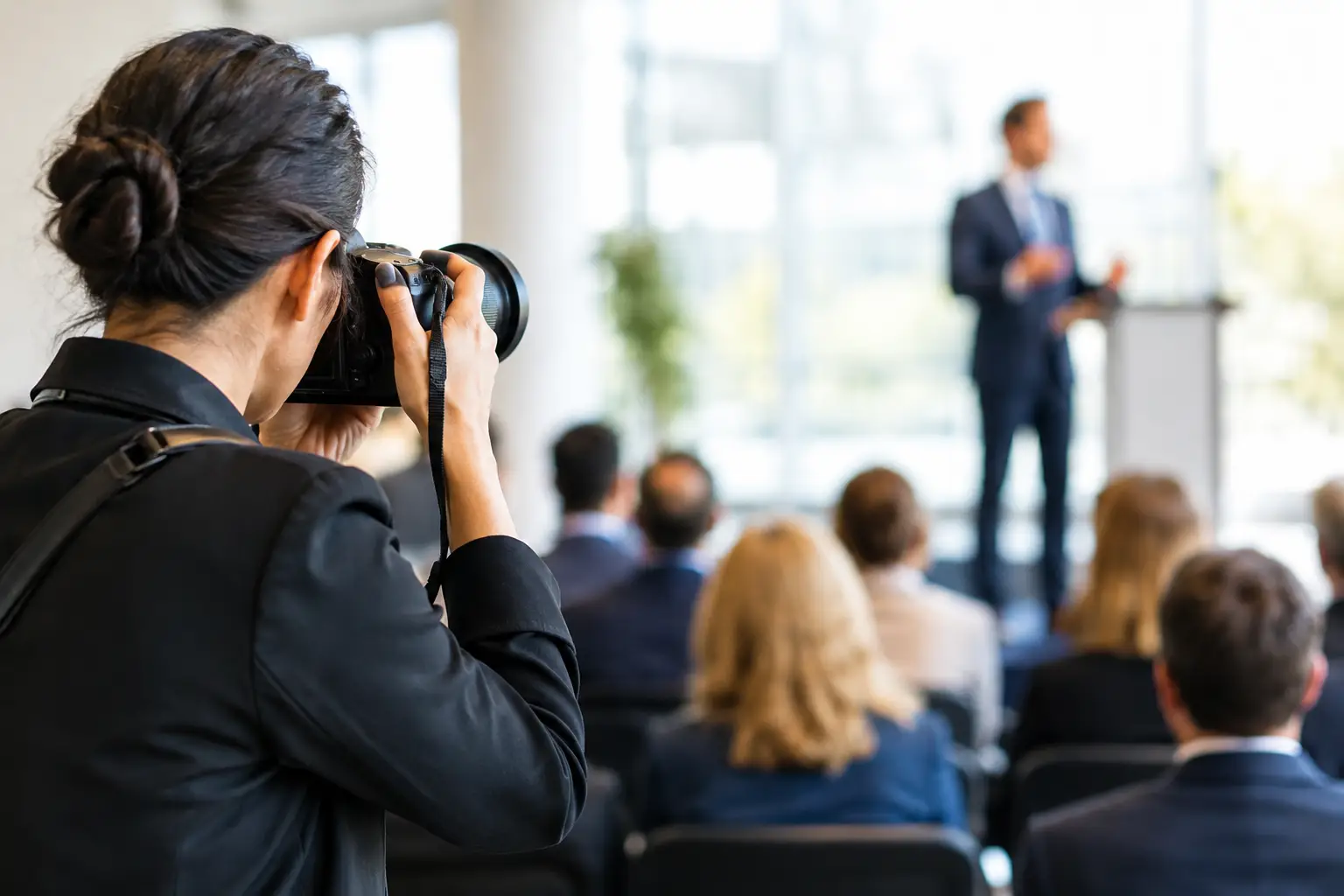
A leadership conference may need a clear visual record of keynote speakers, branded staging and a busy audience. An awards dinner benefits from elegant room details, confident portraits and the reactions that happen just before and after someone walks on stage. A relaxed client gathering may be less about formal coverage and more about warm, natural interaction.
There is no single formula for corporate event photography. It depends on the scale of the event, the venue, the people attending and how you plan to use the final images. A good photographer will ask considered questions early, then build coverage around what matters most rather than arriving with a generic checklist.
Create a focused brief
A brief need not be complicated, but it should be clear. Share the running order, venue address, expected guest numbers, key speakers and any important VIPs. Let the photographer know which moments cannot be missed, such as an opening address, a prize presentation, group photograph or product reveal.
It is also helpful to explain your brand. If your business is polished and formal, the images may need a more editorial, composed feel. If you want to be known for being approachable and people-focused, candid moments and natural expressions should take centre stage. Providing logos, event branding and a sense of where the photographs will appear helps ensure the final gallery feels consistent with your wider communications.
A short list of priorities is valuable. A long list containing every possible angle can make it harder to notice the unexpected moments that give an event its character.
Plan for Natural, Useful Images
The most effective event galleries usually balance the essential record with the atmosphere around it. You will want clear photographs of the room, signage, speakers and sponsors. Yet the images people often return to are the ones with human connection: guests greeting one another, a meaningful conversation over a table, applause from the audience or the small burst of laughter after a formal photograph has finished.
This is where an unobtrusive approach makes a difference. People rarely look comfortable when they feel watched. A photographer who reads the room, works calmly and gives gentle direction only when needed can capture authentic expressions without interrupting the flow of the day.
That does not mean avoiding posed photographs altogether. A few well-organised team portraits or a considered photograph of the leadership group can be very useful, particularly for press and recruitment. The key is to make space for them. Set aside ten minutes at a sensible point in the schedule, choose a tidy area with good light and tell the relevant people in advance. Trying to gather everyone while dinner is being served is unlikely to produce relaxed faces.
Give the photographer access and context
Small practical details can have a large effect on the finished work. Arrange access to the venue before guests arrive if you would like photographs of the room set up and untouched. Ensure the photographer knows where the main entrances, speaker areas and any restricted spaces are. If lighting will change dramatically for a presentation or entertainment, flag this in advance.
It is equally useful to introduce the photographer to your event organiser or a member of staff who knows the schedule inside out. Events are busy, and timings can shift. A quick point of contact means important moments are less likely to be missed while everyone is managing the day itself.
If the event involves name badges, consider whether they are readable and appropriately positioned. If your guests include high-profile attendees or anyone with safeguarding or privacy requirements, make this clear before the event begins. Professional coverage should always respect people as well as the brand.
Make the Venue Work Harder
A beautiful venue helps, but it is not essential. What matters is how the space is prepared and used. Cluttered registration desks, spare boxes near the stage and half-empty tables can distract from an otherwise excellent photograph. A quick walk-through before doors open can identify the areas most likely to appear in the images.
Think about light too. Window light can create a fresh, natural feel during daytime meetings, while evening events often call for careful use of flash that preserves the mood rather than flattening it. Coloured uplighting may suit the room but can affect skin tones, so a photographer needs time and experience to balance the atmosphere with flattering portraits.
Branding deserves attention beyond the obvious banner behind the stage. Menus, programmes, welcome signs, name cards, product displays and subtle logo details all help tell the fuller story. These photographs are particularly useful when you are promoting the next event, as they show the thought and consistency behind the guest experience.
Choose Images With a Life Beyond the Event
When planning coverage, picture where the photographs will live six months from now. A wide room shot might suit an annual report or an event page on your website. A speaker image could support a press release. Candid networking photographs often work brilliantly on social media because they feel immediate and human. Strong portraits of staff can support recruitment and internal recognition.
This is also a reason to request a variety of orientations. Landscape images can work well for websites and presentation slides, while portrait images often suit social posts and printed features. Close details, wider scene-setting frames and mid-range moments each have their place.
The trade-off is that coverage has limits. At a large conference with multiple breakout rooms, one photographer cannot be in every place at once. If simultaneous sessions are a priority, it may be worth discussing additional coverage. If your budget is focused on a single photographer, identify the most valuable parts of the programme and allow the rest of the event to unfold naturally.
Don’t Let Your Images Stay on a Hard Drive
The value of event photography grows when it is used with purpose. Select a small group of images soon after the event for a thank-you post, a news update or a message to attendees. Share speaker and partner images where appropriate, making it easy for others to celebrate the event too.
Then look again when you are planning your next campaign, refreshing your website or recruiting new people. Real photographs of your business at work can bring warmth and credibility to places that might otherwise feel overly polished or impersonal.
For internal events, do not overlook the value of print. A framed team photograph in the office, or a small collection of images displayed in a meeting space, can be a quiet reminder of shared progress. Digital images move quickly through a feed. Printed photographs invite people to pause.
A successful event is made up of hundreds of decisions, conversations and moments of effort. Give those moments the care they deserve, and your photographs will continue telling the story long after the final guest has headed home.