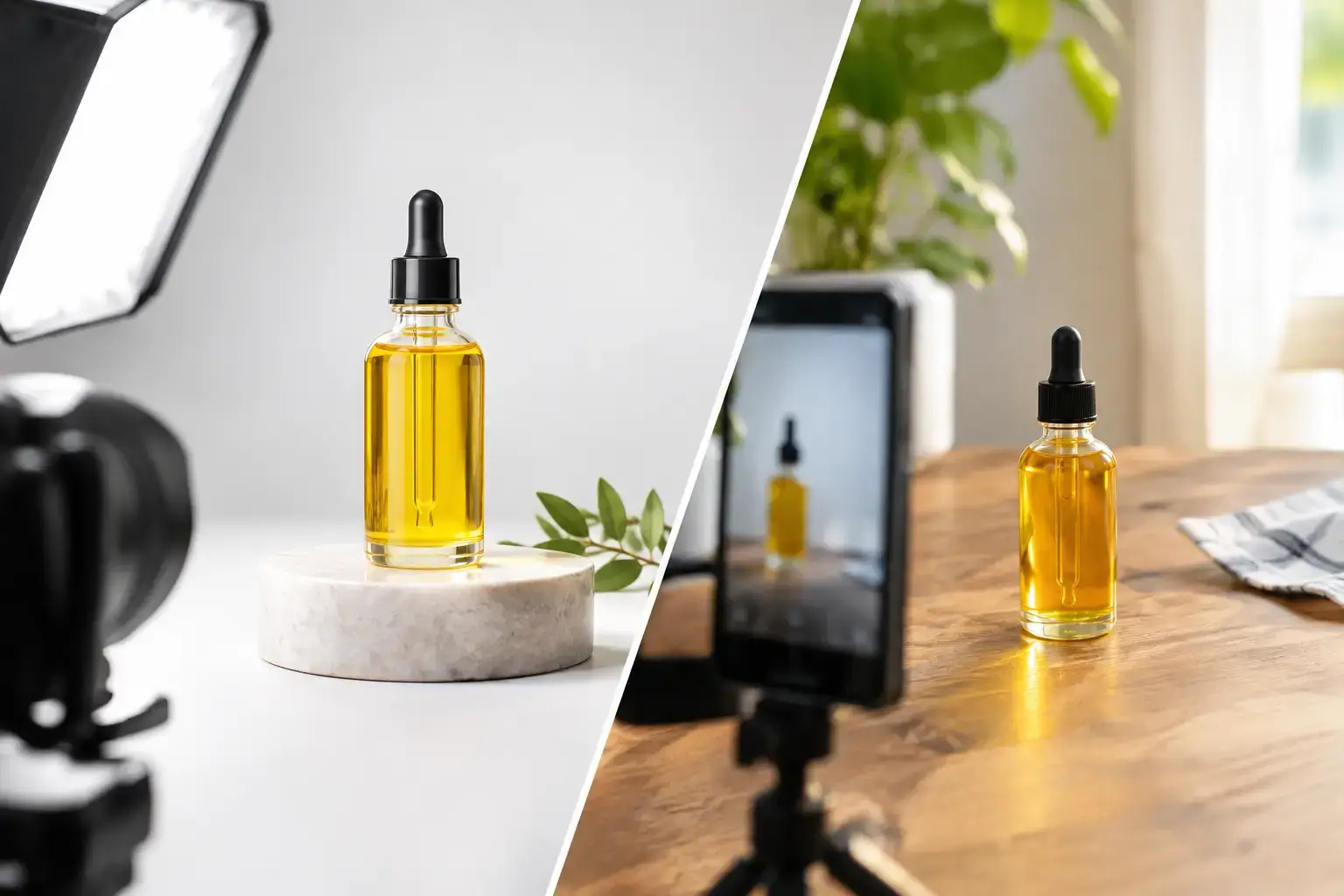
A customer cannot pick up your product through a screen. They cannot feel the weight of the packaging, notice the texture, or ask a question across the counter. Your photographs have to do that work for them. That is why the choice between professional versus DIY product photography is about far more than whether a picture looks nice. It affects how trustworthy your business feels, how clearly customers understand what they are buying, and whether your product is remembered.
For many small businesses across the Scottish Borders and beyond, there is no single right answer. A carefully made phone image can be exactly what is needed for a quick social media update. But when photographs represent the heart of your website, a product launch, a wholesale pitch or printed advertising, professional skill can make a meaningful difference.
Professional versus DIY product photography: what are you really comparing?
It is tempting to frame the decision as cost versus quality. In reality, you are comparing time, consistency, control and confidence as well.
DIY photography is immediate. You know your products better than anyone, and you can photograph a new colourway, a seasonal bundle or a behind-the-scenes moment as soon as it is ready. Modern phones are remarkably capable, particularly in soft window light. For businesses with a small catalogue and an informal, personal social presence, that flexibility is genuinely valuable.
Professional product photography brings a different kind of value. It is planned around the customer’s experience: what they need to see first, which details answer their doubts, where the image will appear, and how the full collection should sit together. The aim is not to make every product look artificially perfect. It is to make it look desirable, honest and unmistakably yours.
A professional also brings controlled lighting, thoughtful styling, suitable lenses and careful editing. Those tools matter because products are unforgiving subjects. A shiny candle jar can reflect the whole room. A pale garment can lose its shape against the wrong background. Food can look flat in a matter of seconds. Good photography solves these quiet problems before they become distractions.
The hidden cost of doing it yourself
Taking the photograph is often the quickest part. Preparing products, clearing a space, testing light, editing files, resizing images and trying again when the results are not quite right can take a surprising amount of a working day.
That time may be well spent if photography is something you enjoy and your image needs are modest. It can also pull attention away from making products, serving customers or building the business. The question is not whether you can take a photograph. Most people can. The better question is whether creating a complete, consistent set of sales-ready images is the best use of your time.
There is also the cost of inconsistency. If one product is photographed in warm kitchen light, another against a grey wall, and a third with a different crop and editing style, a shop page can begin to feel pieced together. Customers may not be able to explain why, but they notice when a brand feels considered.
This matters especially when your prices reflect handmade quality, specialist ingredients or a premium service. Beautifully made work deserves images that support its value rather than quietly undermine it.
Where DIY images can work brilliantly
DIY is not a lesser choice by default. It can be the most authentic option for everyday content. A maker at work, a parcel being packed, a new delivery arriving, or a customer’s dog enjoying a treat all benefit from a more spontaneous feel. These moments help people see the human care behind a small business.
The key is to give yourself a simple repeatable set-up. Choose one spot near a large window, turn off mixed artificial lighting, use a clean backdrop, and photograph at a similar time of day where possible. Keep the background quieter than the product, and leave enough room around the item for social media crops and text.
Avoid relying on heavily filtered images. Filters can change the true colour of fabric, ceramics, cosmetics and packaging, creating disappointment when an order arrives. Gentle editing to correct brightness and colour is useful. Changing the product is not.
DIY photography is often at its best when it supports, rather than replaces, your core brand imagery. Think of it as the friendly, current voice alongside a polished foundation.
What a professional shoot gives your business
A professional shoot begins before the camera comes out. There is a conversation about your brand, customers, product range and intended use. An image for a square Instagram post has different requirements from one for a website banner, a brochure or a retailer’s product listing. Planning prevents the frustrating situation of having lovely photographs that simply do not fit where you need them.
The finished collection should also feel coherent. Backgrounds, light, angles and styling are chosen so customers can move from one image to the next without visual clutter. This is particularly helpful for collections with several sizes, scents, flavours or colours. Consistency makes comparison easier, and easier decisions can lead to more confident purchases.
Professional images can show both clarity and feeling. A clean packshot may be essential for a web shop, but a lifestyle image helps people imagine the product in their own home or as part of a gift. The right balance depends on what you sell. Jewellery needs detail and scale. Skincare needs texture and clean colour. A hand-thrown mug may need a little atmosphere, while still showing its shape honestly.
There is a practical benefit after the shoot too. A well-organised library of high-resolution files gives you material for weeks or months of marketing. You can use the photographs across your website, social channels, press material, printed cards and seasonal campaigns without beginning from scratch every time.
Choosing based on the stage of your business
If you are testing an idea at a market, launching a very small range or posting regular informal updates, a DIY approach may be sensible. Put your energy into clear light, accurate colour and a tidy frame. You do not need a studio full of equipment to make an honest, appealing image.
If you are investing in a new website, preparing for a major launch, approaching stockists or running paid advertising, professional photography is usually worth considering. At that point, your imagery is no longer simply documenting a product. It is carrying a significant part of your sales conversation.
A hybrid approach often gives small businesses the best of both worlds. Invest in a professional library for your key products, hero images and evergreen website content. Then use your own photographs for timely stories, new arrivals and the real day-to-day moments that give your business character.
This is also a gentle way to keep your brand grounded. Your polished images set the standard; your informal images let customers see the hands, care and personality behind it.
How to prepare for a product photography session
The more prepared you are, the more useful your final gallery will be. Bring products in perfect condition, including spare labels or packaging in case something is marked. Think about your bestsellers, your highest-margin items and any products customers often ask about. Those are usually the photographs to prioritise.
Consider the feeling you want people to take away. Is your brand calm and natural, bold and playful, refined and minimal, or rooted in local craft? Props and surfaces should support that story, not steal attention from the product. A few thoughtful details are more effective than a crowded scene.
Before the session, make a practical note of every place the images need to work. Website headers, online shop listings, portrait social posts, landscape banners and print all have different shapes. Sharing this early helps the photographer build the right variety into the shoot.
At Graeme Webb Photography, the approach is always personal: a wee chat about what you have made, who it is for, and how you want people to feel when they first encounter it. The strongest commercial photographs are not just technically polished. They reflect the care that already exists in the business.
Let the photograph earn its place
The best product image does not shout for attention with tricks. It gives a customer a clear, inviting reason to pause, look closer and trust what they see. Whether you create it yourself or commission it professionally, judge it by that standard.
Set one product on a clean surface this week and photograph it in soft daylight. Then ask yourself one honest question: does this image show the level of care I want customers to expect from my business? Your answer will point you towards the next right step.