A beautiful wedding portrait rarely begins with a perfect pose. It begins when you stop worrying about what your hands are doing, take a breath, and focus on the person you have just married. If you are wondering how to pose wedding portraits without looking stiff or unlike yourselves, the reassuring answer is that you do not need to perform for the camera. You simply need gentle direction, a little time together, and permission to be yourselves.
The most meaningful portraits are not about copying a photograph you saw online. They are about capturing the quiet glance, the burst of laughter, the way you naturally lean towards one another. A good photographer will shape the light, find a flattering background and guide you into a comfortable starting point. From there, the real magic comes from connection.
Begin with comfort, not a pose
Many couples say they feel awkward in photographs, especially if they have not had professional pictures taken before. That is completely normal. On a wedding day, there is a great deal happening around you, and being asked to stand still in front of a camera can feel surprisingly unfamiliar.
The best approach is to start simply. Stand close enough that your bodies are connected in some way – a hand around a waist, shoulders touching, or hands gently held. Turn slightly towards one another rather than facing squarely forwards. This creates a softer shape and gives you somewhere natural to look.
You do not need to hold a fixed smile. Look at your partner, speak to them, or take a moment to notice the details of the day together. A photographer may ask you to walk slowly, tuck in close, or whisper something that makes the other laugh. These small prompts replace the pressure of “posing” with something much more familiar: being together.
How to pose wedding portraits naturally
Natural-looking wedding portraits are carefully guided, but they should never feel rigid. Think of a pose as a starting position rather than a rule you must hold for ten minutes. Once you are placed well in the light, movement and interaction will make the image feel alive.
A relaxed walk is one of the easiest places to begin. Walk hand in hand, slowly enough to chat, without concentrating on the camera. Let your eyes meet now and again. If your dress or kilt needs adjusting, that is fine – those in-between moments often make the loveliest photographs.
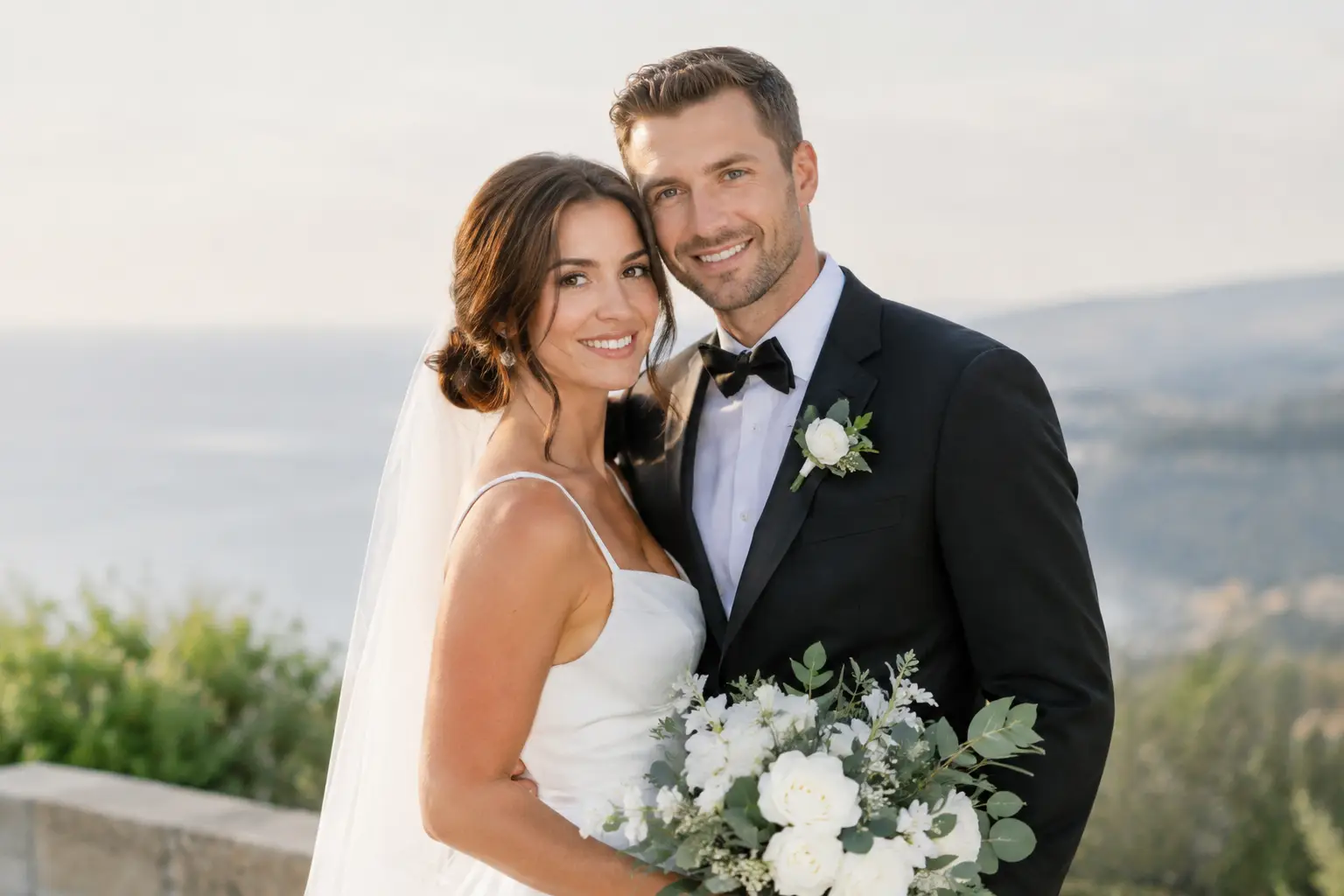
For a closer portrait, draw near and allow your heads to rest together gently. Keep your shoulders low, breathe, and avoid pressing your faces together too firmly. A light touch at the cheek, a hand around the back, or fingers linked at the waist gives the photograph tenderness without looking overly arranged.
If you are unsure where to put your hands, give them a purpose. Hold your bouquet low and slightly away from your body, straighten a lapel, rest a hand on your partner’s chest, or place one hand in a pocket while the other holds theirs. Hands look most comfortable when they are soft and doing something small.
Let your eyes tell part of the story
You do not have to look into the camera for every portrait. In fact, photographs where you are focused on each other often feel more personal when you return to them years later. Looking at your partner can bring out a natural smile; looking down briefly can create a quiet, reflective frame; looking out across the landscape can suit a grander portrait.
There will still be time for a few photographs looking towards the camera, particularly for parents and grandparents who may treasure a classic framed image. The difference is that these should feel calm and flattering, not formal for the sake of it. A relaxed expression is always better than a forced grin.
Make the most of your surroundings
The Scottish Borders, Edinburgh, the Lothians and Northumberland offer remarkable settings, but a meaningful portrait does not depend on a dramatic view. A stone doorway, a patch of soft window light, an old garden wall or a sheltered spot beneath trees can be every bit as beautiful as a sweeping landscape.
Your photographer will look for clean backgrounds, flattering light and places where you can stand comfortably. If it is bright, you may be guided into open shade or asked to turn away from the sun. This is not only about avoiding squinting. Softer light is kinder to skin tones and allows you to relax your expression.
Scottish weather also asks for a little flexibility. Wind can add wonderful movement to a veil or dress, while a light drizzle can make colours deeper and give the day a wonderfully atmospheric feel. If the weather is truly wild, a sheltered doorway, the ceremony room or even a well-chosen indoor corner can produce intimate, elegant portraits. The photograph matters more than sticking to a particular plan.
Move together rather than holding still
Still photographs can contain plenty of movement. Rather than standing in one spot and wondering what to do, try gentle actions that feel natural to you. Walk towards each other and meet in the middle. Pull your partner in for a hug. Turn a little, then settle. Take a few seconds to talk about the moment you first saw one another that day.
These prompts are not tricks. They give you something real to respond to, which is why the expressions they create feel genuine. Laughter is welcome, but so are the quieter moments: a hand squeeze, a deep breath, or a look that says, “We did it.”
It also helps to move slowly. Wedding days can pass in a blur, and portrait time can become a small pause amid the excitement. There is no need to rush from one setup to the next. A few unhurried minutes allow you to settle, forget the camera and enjoy being newly married.
Trust the details, but do not fuss over them
A few thoughtful adjustments make a significant difference in photographs. Your photographer may straighten a jacket, smooth a dress, move hair from your face or suggest that you lower your bouquet slightly. These are small refinements designed to make sure nothing distracts from you.
Try not to over-correct yourselves. Constantly checking your dress, hair or smile can pull you out of the moment. If something needs fixed, your photographer will spot it. Your only job is to stay close, listen to the guidance and enjoy your partner.
This is especially useful when working with a long veil, a full skirt or a bouquet. These details can be given their own moment in a portrait, but they should not dictate every frame. The people wearing and holding them are always the heart of the image.
Build enough portrait time into the day
The easiest way to feel relaxed is not to squeeze portraits into ten hurried minutes between the ceremony and dinner. A sensible timeline gives you space to breathe, especially if you are travelling between venues or hoping for photographs in several locations.
For many couples, around 20 to 30 minutes after the ceremony is enough for a lovely set of relaxed portraits, particularly when the venue has good grounds close by. If you would like a wider variety of images, or if group photographs are also planned, allow more time. There is no single correct answer – it depends on the season, the light, the size of your wedding and how much time you want to spend with guests.
A short second portrait session later in the day can be particularly worthwhile. The softer light before sunset is beautiful, and by then you are usually more at ease in front of the camera. Even ten minutes away from the dance floor can create some of the most atmospheric images of the day.
Choose photographs that still feel like you
You may love editorial images, windswept landscapes, joyful laughter or timeless, softly lit portraits. Share those preferences with your photographer, but do not feel you need to recreate every idea exactly. The photographs should reflect your relationship, your venue and the feeling of your own day.
If you are naturally quiet, there is no need to manufacture exuberance. If you are playful and laugh constantly together, there is no reason to force solemn expressions. The finest wedding portraits make room for both the polish of a beautifully composed photograph and the honest character of the couple within it.
At Graeme Webb Photography, the aim is always to offer enough calm guidance that you feel looked after, while leaving room for the moments that cannot be posed. Years from now, whether the photograph lives in an album, on your wall or in the hands of someone you love, what will matter most is not whether you remembered every instruction. It will be that the image brings you straight back to how it felt to stand together on that day.