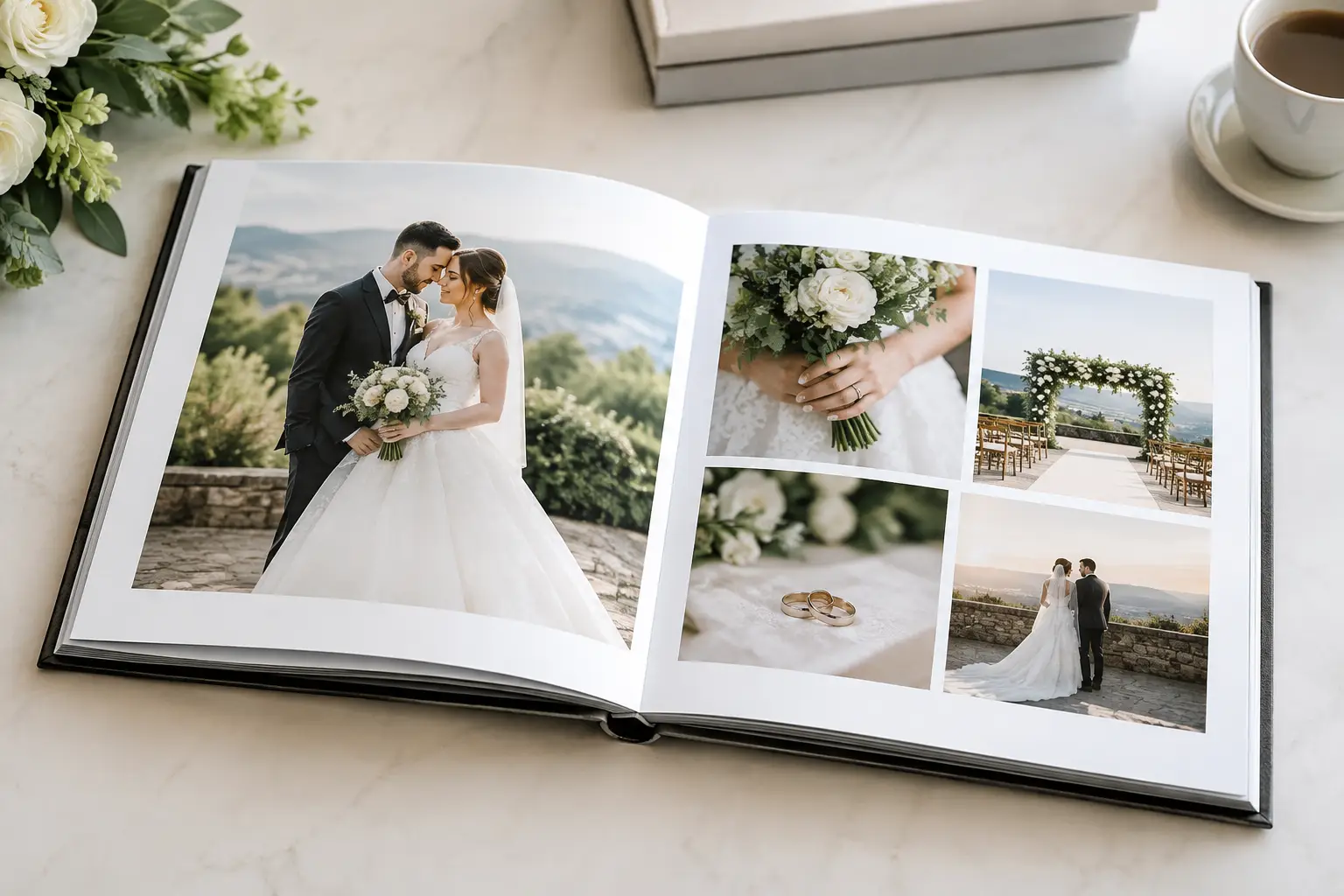
The moment you open a beautifully made wedding album, the day comes back in a different way. Not as a stream of images on a screen, but as a story you can sit with: the nervous hands before the ceremony, the squeeze from a grandparent, the wind catching a veil, and the laughter that took everyone by surprise. This wedding album design example story shows how those moments can become a keepsake with real feeling.
A wedding album should not try to include every photograph. Its job is more considered than that. It brings together the images that best tell the story of your day, giving the quiet moments as much room as the grand ones.
A wedding album design example story
Imagine a wedding held in the Scottish Borders in early autumn. The morning begins with soft rain on the windows, followed by a break in the clouds just as guests start to arrive. There is a warm, busy atmosphere in both preparations, with family members popping in and out, buttons being fastened, and a few happy tears already appearing.
The album opens gently. Rather than beginning with a formal portrait, the first spread might pair a wide image of the venue and surrounding landscape with a close-up of the finishing touches: a bouquet resting on a chair, handwritten vows, a jacket being buttoned. These photographs set the scene without rushing ahead. They say, this is where it happened, and this is how it felt before the day truly began.
A following spread could hold two moments from the preparations. On the left, a parent seeing their son or daughter ready for the first time. On the right, friends sharing a laugh while making last-minute adjustments. Neither image needs a lengthy explanation. Together, they carry the nervous excitement and affection that make this part of the day so memorable.
Giving the ceremony room to breathe
The ceremony is often where an album slows down. A single full-page image of one partner arriving can create a lovely pause before the key moments unfold. The next spread may show the other partner’s reaction, the exchange of vows, and the warmth of guests watching on.
This is where careful editing matters. Ten photographs of the rings being exchanged are rarely stronger than one perfectly timed frame, perhaps alongside a wider photograph that includes the people who matter most. A good design chooses the image with the most feeling, not simply the most obvious action.
For this example, the signing of the register is followed by a joyful confetti walk. The contrast works beautifully: a quieter, intimate moment beside a burst of movement, colour and celebration. When laid out across a spread, the eye naturally moves from calm to energy. It feels much like the day itself.
The middle pages hold the heart of the day
After the ceremony, the album makes room for the people around you. Group photographs have their place, particularly when they include generations of family who may not often be together. But they need not dominate the design. One clean spread can hold the essential family portraits, leaving the rest of the album free for genuine connection.
The couple portraits are often a favourite part of the finished book. They are not about disappearing from your guests for hours or being asked to perform for the camera. A relaxed walk through the grounds, a few quiet minutes together, and some gentle guidance are usually all that is needed. The strongest photographs tend to be the ones in between: a shared look, a hand held instinctively, or laughter after a whispered comment.
In this wedding album design example story, a panoramic landscape photograph might run across both pages, placing the couple within the Border countryside. Turn the page and the pace changes again, with smaller, more intimate images of the two of them. This variation gives the album rhythm. Every spread does not need to look the same to feel cohesive.
Reception moments that are easy to forget
The wedding breakfast and speeches often provide some of the most meaningful photographs, even though couples may not notice them at the time. A child concentrating on a place card, a guest reaching across the table to hold someone’s hand, or the quiet pride on a parent’s face during a speech can become especially precious in years to come.
For the speeches, one larger photograph of the speaker can sit alongside two or three smaller reactions. This allows the album to tell the full story: not only what was said, but what it meant to the people hearing it. Tears, laughter and raised glasses all deserve their place.
As evening arrives, the visual mood often changes. Candles glow, the room becomes more relaxed, and the dance floor gathers pace. A first dance spread may use one full-page image for impact, followed by a collection of joyful dance floor moments. If there is a sunset, sparkler exit or evening portrait, it can make a beautiful closing image – a calm final note after the celebration.
Why fewer photographs can tell a richer story
It can feel strange to leave lovely images out of an album, particularly when every part of the day matters. Yet an album becomes more powerful when each photograph has space to be seen. Crowding too many images onto a page can make the important moments compete with one another.
That does not mean every album must be minimal. It depends on the wedding and on what matters most to you. A smaller, intimate celebration may suit a concise album with generous white space. A full day with a large family, several cultural traditions or an energetic evening celebration may need more pages to do the story justice.
The key is intentionality. The first draft should follow the natural flow of the day, then be refined until the sequence feels effortless. At Graeme Webb Photography, that process is approached as storytelling rather than simply arranging images in chronological order. The result should feel personal to the two people at its centre, not like a template that could belong to anyone.
Choosing details that will still matter decades from now
When you picture your album in ten, twenty or fifty years, the details take on a new significance. The flowers, stationery and table settings are part of the visual memory of the day, but so are the small human details: your hands linked during the ceremony, a loved one’s familiar smile, muddy shoes after a wet walk outside, or the way your friends threw themselves into the dancing.
A well-designed album balances both. It honours the care you put into the day while keeping the focus on the people and relationships that made it yours. Fine-art design is not about making every page look elaborate. It is about allowing the photographs, paper and craftsmanship to feel timeless enough that they will still be a pleasure to hold years from now.
Physical albums also invite a different kind of sharing. A mobile phone is personal and fleeting; an album is passed across a sofa, opened after dinner, and brought out for anniversaries or family visits. It gives the people in your life a way to revisit the day with you.
Let the final page feel like a memory
The best final image is not always the most dramatic one. Sometimes it is the two of you stepping away from the party for a moment, standing beneath the evening sky, or walking back towards your guests with the day still humming around you. It should leave you with the feeling of having been there again.
Your wedding photographs deserve more than being saved in a folder and occasionally scrolled through. When they are thoughtfully chosen and carefully designed, they become a story with a beginning, a heartbeat and a lasting place in your home.