A beautiful photograph deserves more than a spare patch of wall. Choosing wall art sizes is about giving the people, places and small, fleeting moments in your images the presence they deserve. The right piece can make you pause as you pass it every day. The wrong size can leave even a wonderful image feeling a little lost.
There is no single perfect measurement for every home. A framed family photograph above a fireplace, a wedding portrait in a hallway and a set of playful pet images on a staircase each ask for something different. With a few simple principles, though, the decision becomes far less daunting.
Start with the wall, not the photograph
It is tempting to choose a print size by looking only at the image. Begin by standing back and looking at the wall itself instead. Notice its full width and height, the furniture beneath it, the natural light and how far away you will usually view it from.
A large, uninterrupted wall needs artwork with enough visual weight to hold the space. A small print in the middle of it can feel like a postcard pinned up by accident, however meaningful the photograph may be. Equally, an oversized canvas in a narrow hallway can make the space feel crowded rather than welcoming.
As a useful starting point, aim for a single piece of wall art to fill around two-thirds to three-quarters of the available width above furniture. If a sofa is 180cm wide, artwork somewhere around 120cm to 135cm wide will often look balanced. This can be one statement piece or a carefully planned grouping.
For an empty wall, consider the usable area rather than every inch of plaster. Leave breathing room around the artwork. That quiet space helps the image feel intentional and lets the room retain a calm, considered feel.
Choosing wall art sizes above furniture
Furniture gives you an especially helpful scale to work from. Above a sideboard, bed, sofa or fireplace, art should relate to what sits below it rather than float independently.
Hang the artwork roughly 15cm to 20cm above the furniture where possible. This creates a visual connection between the two. Too high, and the picture can appear disconnected from the room. Too low, and it may feel squeezed in.
A wide landscape wedding photograph can be particularly lovely above a sofa or bed, where its shape echoes the furniture beneath. A tall portrait-oriented image may suit a slimmer space beside a bookcase, in a hall or between windows. The orientation should support the architecture of the room as well as the story within the photograph.
There are exceptions. A mantelpiece may restrict your options, and a high ceiling can allow a more dramatic arrangement. The aim is not to follow a formula at the expense of your home. It is to use proportion as a reassuring guide, then trust what feels settled when you see the piece in the space.
Think about viewing distance
The closer you stand to an image, the more detail you can appreciate. That makes smaller framed prints ideal for intimate places: a bedside table, a gallery wall on the stairs, a reading corner or the wall you see every morning as you come downstairs.
In a larger sitting room or open-plan kitchen, you will often view the wall art from several metres away. A larger piece has the impact needed to be seen and felt across the room. This is where a favourite wedding image, a family portrait full of laughter, or a beautifully characterful pet photograph can become a true focal point.
Size also changes the emotional experience of an image. A small print invites you closer. It feels personal, almost like a private memory. A large fine-art piece brings you back into the moment. You notice the expression, the landscape, the atmosphere and all the feeling held in that fraction of a second.
Match the format to the feeling of the photograph
Not every photograph wants to be enlarged in the same way. The most striking choice is rarely about making every image as big as possible. It is about letting each image do its job well.
A sweeping photograph of the Scottish Borders, an atmospheric wedding scene or a family walking along a beach may have room to breathe as a larger landscape piece. A close portrait often carries enormous impact at a more modest size, particularly when framed with a generous mount. The surrounding space draws the eye in and gives the photograph a timeless, gallery-like finish.
Black and white imagery can be especially effective as a statement piece because it sits comfortably with many interiors and keeps the focus on expression and connection. Colour photographs bring warmth and energy, but consider the tones already in the room. You do not need to match every cushion, but choosing an image that complements the wider palette can make the finished display feel naturally at home.
One statement piece or a collection?
A single large piece creates a clear focal point. It is a wonderful choice for an image that holds a lot of meaning: the quiet moment after a wedding ceremony, a portrait that feels completely like your child, or the photograph of a much-loved dog that captures their personality perfectly.
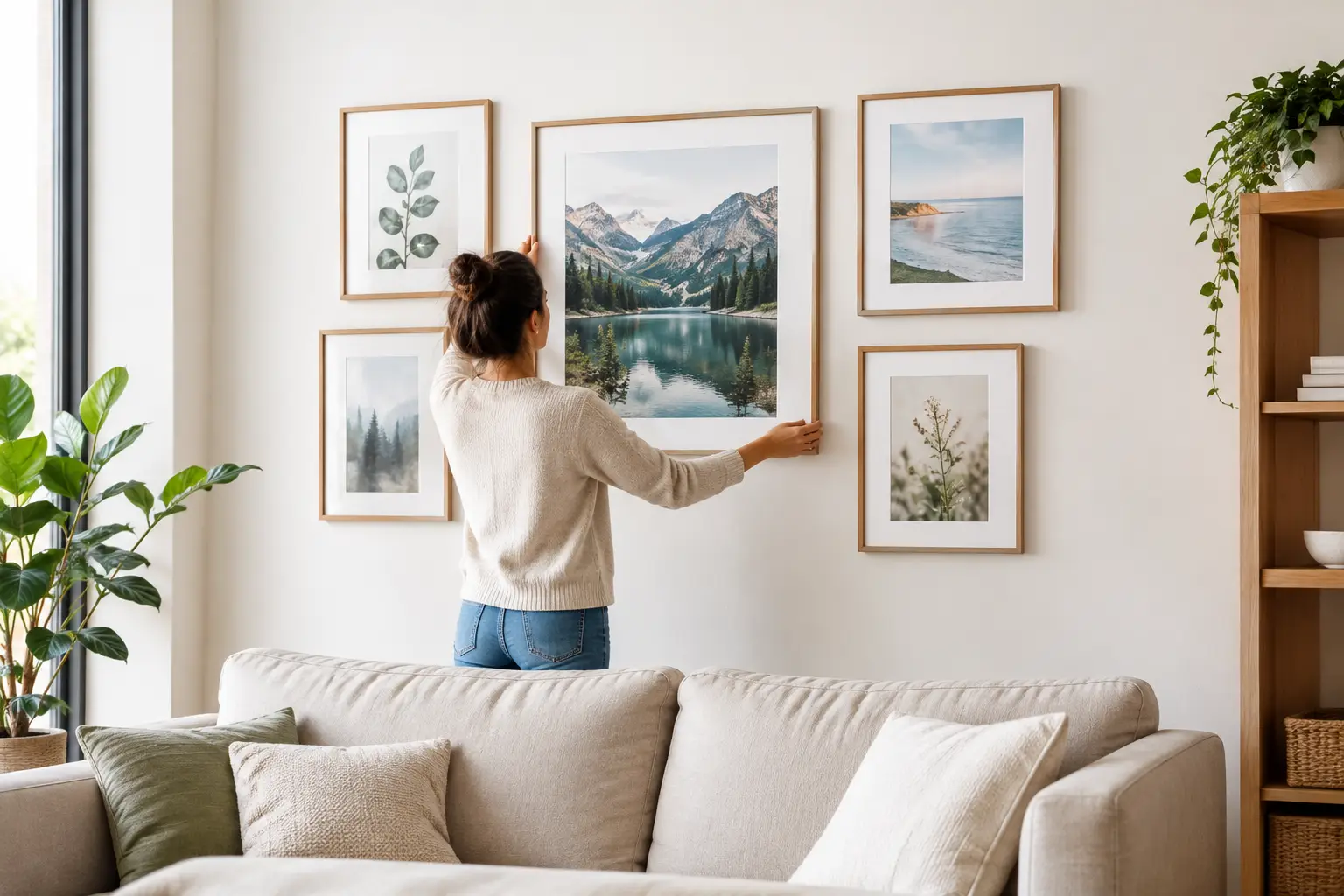
A collection tells a broader story. Three related images can work beautifully above a sofa or sideboard, while a gallery wall gives you room for different chapters of family life. The key is consistency. Use matching frames, a repeated gap between images and a clear overall shape rather than adding photographs one by one without a plan.
Before making holes in the wall, cut paper templates to the size of each frame and use low-tack tape to position them. Live with the arrangement for a day or two. Walk past it in the morning, see it in evening light and look at it from where you normally sit. This simple step removes much of the guesswork.
For a group of images, leave approximately 5cm to 8cm between frames. Treat the complete arrangement as one large piece when judging its relationship to the wall and furniture beneath it.
Do not overlook frame and mount size
When choosing wall art sizes, remember that the print measurement is not always the final measurement. A mount and frame can add considerable width and height, changing how the finished artwork sits in the room.
A smaller image in a substantial frame can feel refined and purposeful, particularly in a traditional home or a quieter corner. A borderless canvas or contemporary frame may give a photograph a more immediate, modern presence. Neither is better. It depends on the image, your interior and whether you want the artwork to whisper or make a statement.
It is also worth considering practicalities. Direct sunlight can fade prints over time, while damp rooms are rarely ideal for framed artwork. Choose a wall where your photographs can be enjoyed often and cared for properly. A premium print is made to last, but its setting matters too.
Give meaningful memories room to stay
The safest option is often a size that feels slightly bolder than you first imagined. Many people worry that wall art will be too large, then find that a carefully chosen statement piece makes their room feel warmer, more complete and more personal.
Your home should not be a showroom. It should hold reminders of the people and moments that matter: the squeeze of a hand on your wedding day, a child’s uninhibited laugh, the familiar tilt of your pet’s head. Choose a size that lets those memories be part of daily life, not something tucked away in a drawer.