The best pet photographs rarely begin with a command to sit still. They begin when your dog has stopped wondering what is happening, your cat has chosen a sunny spot, or your pony has settled into the rhythm of a familiar field. Learning how to photograph pets calmly is less about chasing perfect behaviour and more about creating enough space for their real character to appear.
For many families, a pet is part of the story of home. The muddy paws, the lopsided ears, the way they lean into your leg or wait by the door – these are the details that become more precious with time. A relaxed approach gives you photographs that feel like them, rather than a strained version of them trying to perform for the camera.
Start with your pet’s comfort, not the camera
Before taking a single photograph, give your pet time to understand the setting. At home, that may simply mean letting them wander about while you sit nearby with the camera out of sight. Outdoors, choose somewhere they know well, ideally at a quiet time of day when there are fewer dogs, people and distractions around.
A short walk or a little play before the session can take the edge off excess energy, particularly for young dogs. The aim is not to wear them out completely. An overtired pet can become just as restless as an overexcited one. You are looking for that happy middle ground: alert, comfortable and ready to engage.
Cats usually set their own pace. Rather than lifting them into position, follow their lead. If they have claimed the windowsill or curled up on the sofa, work with the light and setting you have. The familiar surroundings will often tell a more honest story than a carefully arranged backdrop ever could.
How to photograph pets calmly without forcing poses
The simplest way to make a pet uneasy is to expect them to behave like a person in front of the camera. Long holds, repeated commands and lots of people calling their name can quickly turn a pleasant experience into a confusing one.
Instead, think in short bursts. Take a few photographs, then allow a break for a sniff, a drink, a cuddle or a wander. Keep your voice gentle and your movements unhurried. If your pet walks out of the frame, let them. Often, the moment just after they return is far more natural than anything you could have directed.
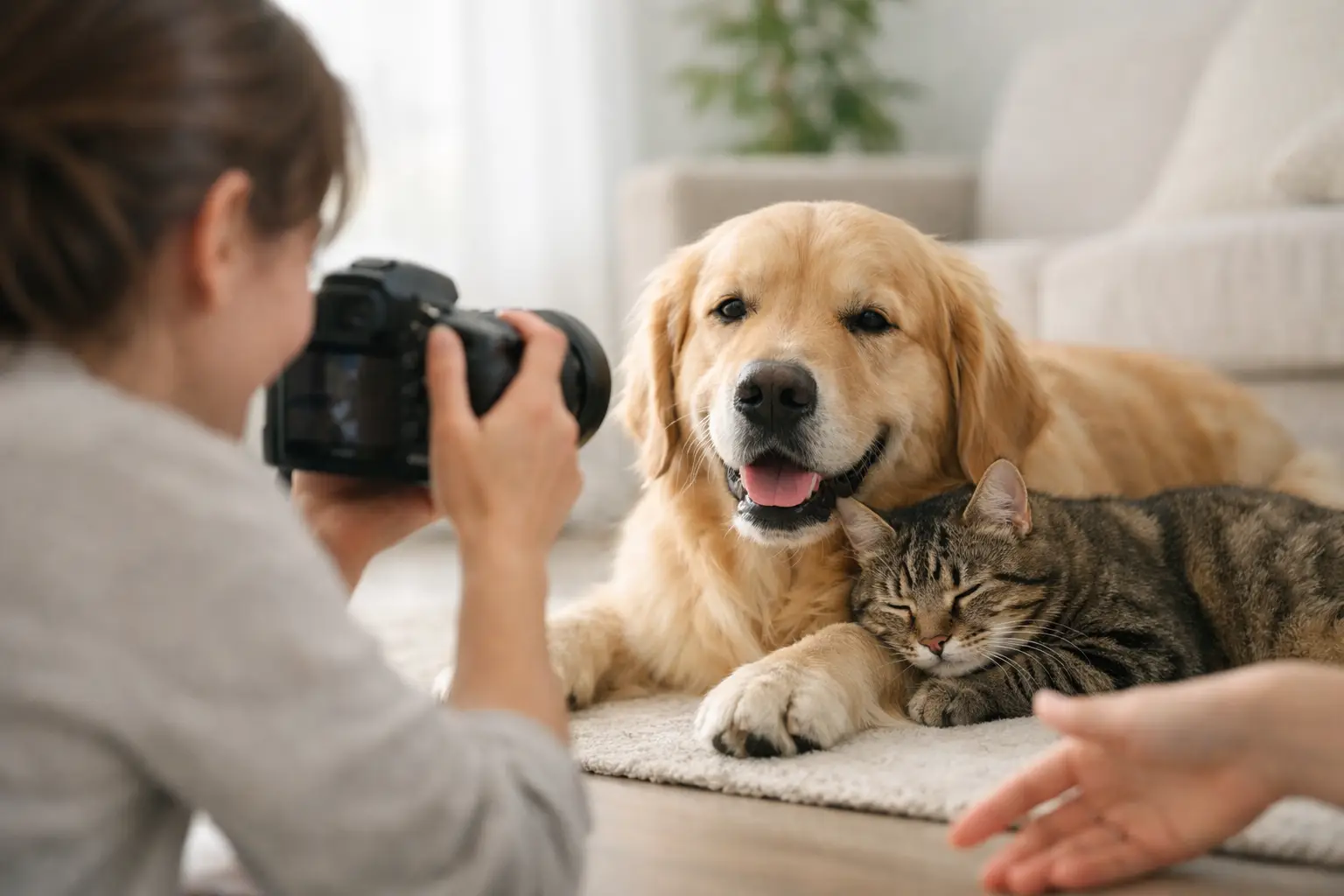
Treats can be useful, but use them thoughtfully. Holding a treat directly above the lens may give you a neat head-on portrait, yet it can also create an intense, fixed stare. Try holding it slightly to one side for a softer profile, or ask a family member to stand nearby and quietly gain their attention. For some pets, a favourite toy or the sound of a familiar phrase works better than food.
There is also no need for every photograph to show a pet looking at the camera. A dog watching their person, a cat stretching in the light, or a horse lowering its head for a scratch can carry far more feeling. Connection is often found in the in-between moments.
Choose light and locations that feel easy
Soft daylight is wonderfully forgiving for pet portraits. Near a large window at home, place your pet just beside the light rather than in a harsh patch of sunshine. This gives shape to their face and coat while keeping the mood gentle. Turn off mixed artificial lights where possible, as these can create odd colour casts in fur.
For outdoor photographs, early morning and the hour or two before sunset tend to offer the most flattering light. On bright Scottish days, though, open shade can be the better choice. A woodland edge, a quiet lane with soft cloud cover, or the shaded side of a garden can prevent deep shadows and squinting eyes.
Location should suit the pet as much as the picture. A lively spaniel may be happiest on a favourite walk, with room to explore. A nervous rescue dog may need the security of their own garden. Older animals often photograph beautifully at home, where they can rest between moments and stay close to familiar scents. There is no prize for choosing the grandest view if it makes your pet feel unsettled.
Get down to their level
One small change can transform the feeling of a pet photograph: lower yourself to their eye level. Sitting on the floor, kneeling on the grass or simply placing the camera lower helps the viewer meet your pet properly. Their expression, eyes and personality take centre stage.
This does not mean every image has to be taken from the same angle. A wider photograph showing a small dog racing through long grass can be full of joy, while an overhead image of a cat curled into a familiar chair may feel wonderfully intimate. The key is to avoid photographing every moment from standing height, where pets can look distant and disconnected from their surroundings.
Keep the background simple where you can. Move a bowl, a lead, a pile of washing or anything else that pulls attention away from the subject. You do not need a spotless home or an empty landscape, but a little visual calm allows the eye to settle on what matters most.
Let movement be part of the story
Pets move. That is not a problem to solve; it is often the whole point. Some of the most loved images are not formal portraits at all, but a wagging tail caught mid-run, ears flying, a playful bow, or a quiet walk alongside the people they trust.
If you are using a camera, a faster shutter speed will help freeze action. On a phone, use burst mode or take several frames in quick succession when your pet is moving. Do not wait for one supposedly perfect click. Photograph the approach, the leap, the shake and the recovery. The smallest gesture may become the image you keep.
At the same time, do not make constant movement the plan. A session with an energetic dog benefits from a rhythm of play and pause. Ask them to come close after a short game, reward them, then wait. Those calmer seconds can reveal a beautiful expression, especially when they are looking towards someone they love.
Include the people they love
A pet portrait becomes even more meaningful when it shows a relationship. You do not have to pose formally for this. Sit together on the kitchen floor, walk along a familiar path, share a quiet cuddle on the sofa or let the children read beside the dog. These are the ordinary moments that, years from now, will feel anything but ordinary.
People often worry that they must look directly at the camera. Usually, the stronger photograph happens when they forget it is there. Looking at the pet, reaching for a collar, laughing at an unexpected lick or simply standing together can say far more than a carefully arranged smile.
If children are involved, keep expectations especially light. Give them one simple task, such as gently stroking the pet or walking alongside them, then allow the scene to unfold. Safety and calm matter more than getting everyone in the same frame at the same time.
Know when to pause
A relaxed session has room for change. If your pet starts yawning repeatedly, licking their lips, turning away, hiding, pacing or becoming unusually still, take a break. These can be signs that they need less attention, more distance or simply a moment to reset.
Never push a frightened animal towards a camera, noisy toy or unfamiliar location for the sake of a photograph. The same applies to flashes, which can startle some pets and are rarely needed in good natural light. Patience is not a delay to the process. It is the process.
Sometimes the best decision is to stop and try again another day. That is particularly true for puppies, anxious pets, animals in new homes or those managing age or illness. A meaningful photograph is never worth asking too much of them.
The images you return to will not be the ones where every ear was perfectly placed. They will be the ones that bring back the weight of a head on your knee, the character in a familiar glance, and the feeling of having shared a small, happy moment together.