Your wedding photographs should not spend their life tucked inside a delivery box or saved in a folder you mean to revisit. Knowing how to display wedding prints is really about choosing the moments that still make you feel something – the hand squeeze before the ceremony, the laughter during the speeches, the quiet portrait just after sunset – and giving them a place in everyday life.
There is no single right way to do it. A grand framed portrait can make a beautiful statement in a hallway, while a small collection of fine-art prints beside the bed may feel more personal. The best display suits your home, your taste and, most importantly, the story you want to keep close.
Start with the photographs that feel like you
When you receive your full gallery, it is tempting to choose only the biggest moments: the first kiss, the confetti, the family groups. They deserve their place, of course. But the photographs people live with most happily are often the ones that bring back the atmosphere of the day.
Look for a mix of images. Choose one image with presence, perhaps a portrait of the two of you in the landscape or outside your venue. Then add a few smaller, intimate frames: a parent seeing you ready, a child racing across the dance floor, hands joined during the ceremony, or the look you shared when nobody else was watching.
Think about what you would like to remember on an ordinary Tuesday morning. A print is not simply decoration. It is a small route back to the feeling of being surrounded by the people you love.
How to display wedding prints in each room
A good display does not need to turn every wall into a gallery. Give your chosen images room to breathe, and let the character of each space guide the choice.
Make an entrance in the hallway
The hallway is often ideal for one larger piece of wall art. It welcomes you home and gives visitors a glimpse of what matters to you before they have even taken their coat off. A single framed print works particularly well here, especially if the space is narrow or visually busy.
Choose an image with a clear focal point and enough space around you in the composition. A windswept portrait on a Scottish hilltop, a wide view of your venue, or a relaxed image of the two of you walking away together can hold its own at a larger size.
Keep the sitting room personal, not formal
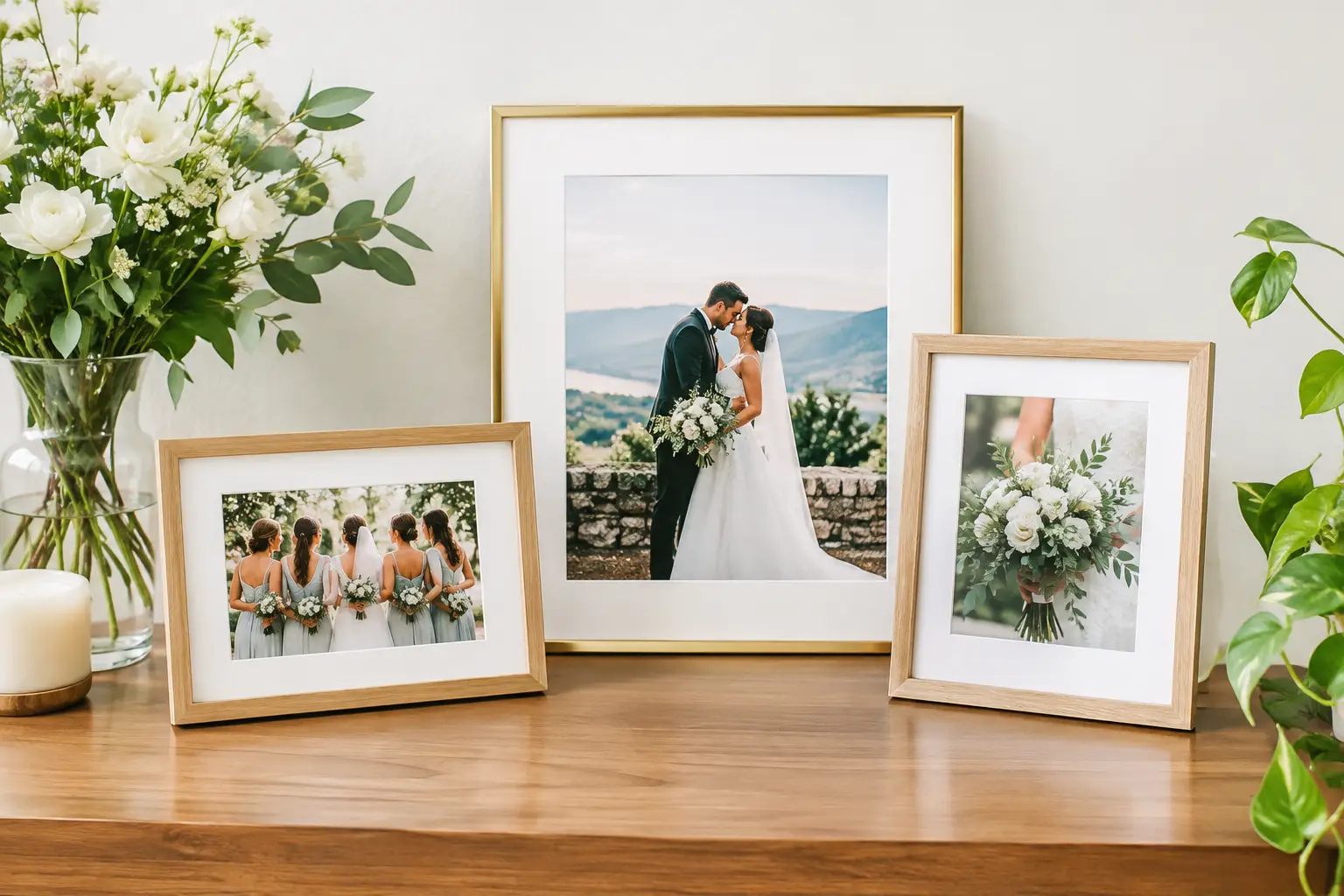
Your sitting room is a natural place for a small gallery wall or a set of framed prints on a shelf. Rather than selecting six versions of the same pose, build a little story. Pair a portrait with a candid moment and a detail photograph, such as flowers, rings or a handwritten note.
For a more relaxed look, use matching frames in different sizes. For a more collected, lived-in feel, vary the frame styles but repeat one element, such as a warm oak finish or soft off-white mount. The common thread stops the arrangement looking accidental.
Choose quieter images for the bedroom
The bedroom suits photographs with softness and calm. A gentle portrait, a black-and-white image from the morning preparations, or a quiet moment during a walk together can feel especially right here. Two medium-sized prints hung side by side above a chest of drawers often create more impact than one very large image.
Avoid positioning photographs where strong morning sun falls directly on them. Even high-quality professional prints and inks benefit from being kept out of prolonged direct sunlight.
Use stairs to tell the fuller story
A staircase gives you space to show more of the day without overwhelming one room. Begin with a favourite portrait at the bottom, then let the collection unfold as you walk upstairs: getting ready, the ceremony, hugs, laughter, portraits and dancing.
Keep the frames consistent and plan the layout on the floor first. Take a quick photograph of the arrangement before lifting a hammer. It is a simple step, but it saves a surprising amount of guesswork.
Choose print sizes with the wall in mind
One of the most common mistakes is choosing prints that are too small for the space. A tiny frame placed alone above a large sofa can look lost, however lovely the photograph inside it may be.
As a starting point, wall art above furniture should generally span around two-thirds of its width. That does not mean one enormous print is always the answer. Three framed pieces, evenly spaced, can create the same sense of balance while allowing you to include different moments.
Before ordering, use paper or painter’s tape cut to the proposed frame size. Place it on the wall and live with it for a day or two. You will quickly see whether the scale feels right from the doorway, from the sofa and as you move through the room.
A mount can also make a modest print feel more substantial. It draws the eye towards the photograph and gives a refined, gallery-like finish, particularly with smaller prints in a hallway or bedroom.
Frame for your home, not for a trend
The frame should support the image rather than compete with it. Natural wood can bring warmth to a country home or a traditional Borders interior. Slim black frames feel clean and contemporary, while soft white or pale oak often suit light, relaxed spaces.
Black-and-white wedding photographs are wonderfully versatile. They sit beautifully in black, white, oak or metallic frames, and their simplicity can make an emotional expression or fleeting gesture feel even more timeless. Colour photographs, meanwhile, tend to look their best when the frame does not clash with the tones already present in the image.
Quality matters here. Cheap frames can warp, discolour or leave the print pressed against the glass. Ask for archival materials where possible, including acid-free mounts and backing. This is particularly worthwhile for prints you hope will stay on the wall for decades, and perhaps one day be passed on.
Build a gallery wall with intention
Gallery walls can feel warm and wonderfully personal, but they need a little planning. Begin with your anchor image – usually the largest print or the photograph with the strongest emotional pull. Arrange the remaining frames around it, keeping the gaps between them consistent. Around five to eight centimetres is usually enough to make the group feel connected without becoming crowded.
A symmetrical grid feels calm and polished. It works well if you have similarly sized prints, perhaps four or six images from the key parts of your day. A looser salon-style arrangement is better for a mixture of sizes and can grow over time as you add family photographs, anniversary portraits or new memories.
If you rent your home or do not want to commit to lots of hooks, consider a picture ledge. It lets you layer framed prints, swap images seasonally and move the arrangement around until it feels right. Just remember that very young children or lively pets may make low shelves less practical than securely hung frames.
Do not forget the photographs you hold
Wall displays bring your images into daily view, but not every photograph needs to be framed. Fine-art prints in a keepsake box are lovely to bring out after dinner, on an anniversary or when family visit. A wedding album has a different kind of value too: it holds the complete rhythm of the day, from the nervous anticipation to the final dance, in a form that invites people to sit together and turn the pages.
Many couples choose one statement piece for the wall, a small set of gift prints for parents, and an album for themselves. It is a thoughtful balance between the images you see every day and the wider story you want to revisit slowly.
At Graeme Webb Photography, the aim is always to create photographs that feel as honest years from now as they did on the day. Displaying them well is the final, lovely part of that process.
Choose the print that makes you pause for a second longer. Frame it properly, place it where life happens, and let it quietly remind you that your wedding day was not just an occasion to photograph – it was the beginning of a story still unfolding.