A wedding image can look beautifully composed without feeling staged. That balance is at the heart of the editorial wedding photography trends couples are drawn to in 2026: photographs with the polish of a magazine spread, but the warmth, movement and real emotion of your own day.
For many couples across the Scottish Borders, Edinburgh, the Lothians and Northumberland, the appeal is not about recreating someone else’s wedding. It is about seeing their own story captured with care. The nervous laugh before the ceremony, a windswept walk across the grounds, your gran squeezing your hand during speeches – these are the moments that make the finished photographs matter long after the confetti has been swept away.
What editorial wedding photography really means
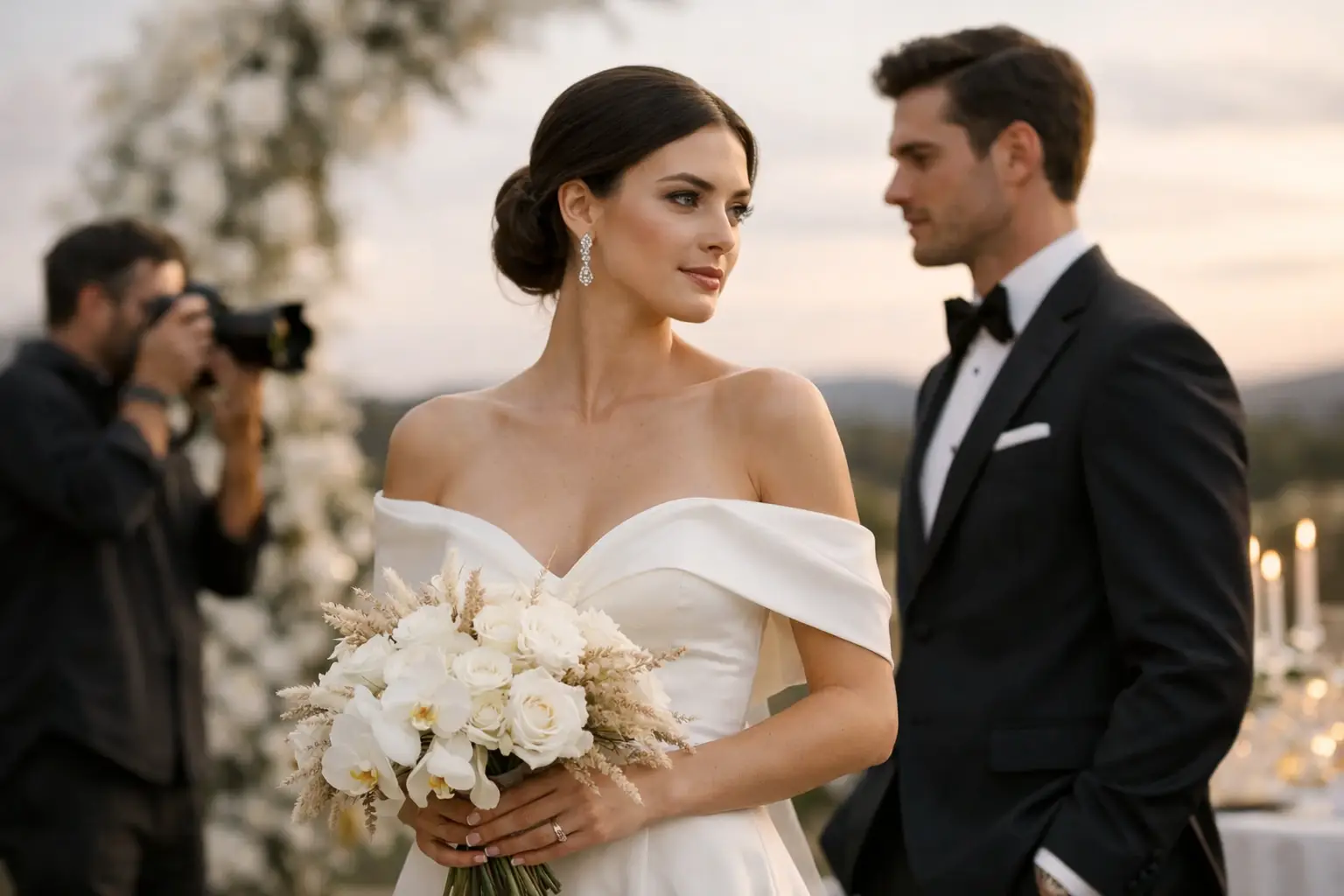
Editorial photography is often misunderstood as a full day of serious expressions and perfectly posed portraits. In reality, the strongest work combines thoughtful direction with room for life to happen. There may be a few carefully crafted images of you both, your outfit, the flowers and the setting, but there is also space for spontaneous glances, happy chaos and the people you love being fully themselves.
Think of it less as posing and more as gentle guidance. A photographer might place you in beautiful light, suggest a small movement or give you something simple to do with your hands. Then they step back, allowing the connection between you to take over. The result feels considered rather than contrived.
This approach suits couples who want photographs with a refined finish but do not want their wedding to become a long photoshoot. It is also particularly fitting for Scottish weddings, where dramatic weather, historic venues, open landscapes and soft northern light can become part of the story rather than something to manage around.
Editorial wedding photography trends shaping 2026
A return to genuine feeling
The most meaningful shift is away from images that look perfect at the expense of personality. Couples still appreciate elegant portraits, but they are choosing photographs that reveal how the day felt. Tears during a reading, your friends roaring with laughter on the dance floor, or the quiet breath you take together just after the ceremony often become the pictures people return to first.
That means a relaxed documentary eye is becoming essential within an editorial approach. The camera is present, but it should not make every guest feel as though they are performing. Real moments cannot be manufactured, and they bring depth to a gallery of beautiful details and portraits.
Fashion-inspired portraits with softer direction
Editorial portraits remain popular, especially for couples who have chosen a striking outfit, a beautifully designed venue or meaningful styling details. The modern version is less about rigid symmetry and more about shape, texture and atmosphere.
Expect portraits that use doorway light, the sweep of a staircase, a quiet corner of a country house or a simple stone wall as part of the composition. Movement matters too: walking hand in hand, adjusting a veil, leaning together against the wind or simply taking a moment to look at one another creates natural energy.
The key is to allow enough time. Ten unhurried minutes around sunset can be far more valuable than attempting portraits between every part of the schedule. If the weather turns, a skilled photographer can make use of an elegant indoor space, rain on the windows or a dramatic umbrella shot. The aim is never to chase a trend so closely that you spend your day worrying about conditions.
Details that tell a fuller story
Flat lays of stationery, rings and flowers are still part of editorial wedding photography, but the focus is becoming more personal. Rather than photographing details simply because they are expected, couples are including objects that say something about their day: a family heirloom, handwritten vows, tartan, a favourite fragrance, a piece of jewellery borrowed from a loved one, or the invitation that set the tone for the celebration.
These images work best when there is a little breathing room in the morning. Keeping your key details together in one place helps, but perfection is not required. A wedding morning has its own energy, and some of the loveliest images happen while someone is fastening a dress, sharing a toast or helping with cufflinks.
Direct flash after dark
A little direct flash is having a well-deserved moment. It can create bold, lively images in the evening, particularly during a packed dance floor, a champagne spray or a late-night walk outside the venue. The look is energetic, nostalgic and full of celebration.
It is not right for every image or every couple. Used all day, it can overpower the soft, timeless feeling many people want from their wedding photographs. Used selectively, it adds contrast to a gallery: calm, luminous daylight images alongside joyful frames that feel as though they belong in the middle of the party.
Film-inspired colour, not heavy filters
Couples are increasingly drawn to photographs with gentle colour, flattering skin tones and a sense of softness. This is often described as film-inspired, though it should not mean every image is covered by a fashionable filter.
A lasting edit respects the colours you chose. The green of a Borders hillside, the warmth of candlelight, the deep tones of a winter suit or the subtle shades in a bouquet should still feel true when you look back years from now. Trends in editing come and go quickly; thoughtful colour and good light endure.
The setting becomes a character
Wedding venues are no longer just a backdrop for formal group photographs. Couples are choosing places with genuine meaning and character, then allowing those surroundings to shape the images. That might be a family garden, a city venue full of architectural lines, a Border country house or a coastal spot that has always felt like home.
This does not require a grand location. Editorial imagery is often strongest when the setting feels authentic to the couple. A simple room with lovely window light, an old gate at the edge of a field or a quiet lane near the venue can be more evocative than a location chosen purely because it photographs well online.
How to make the style feel like you
The best editorial wedding photographs begin before the wedding day, with trust and a clear sense of what matters to you. Share the parts of the day you are most looking forward to, as well as anything you feel nervous about. If being photographed makes you uncomfortable, say so. A calm, experienced photographer can adapt their direction and make space for you to settle in.
It also helps to distinguish between inspiration and imitation. Save images for their mood, light or sense of movement, rather than expecting an exact copy. Your venue will be different, the weather will be different, and most importantly, you will bring your own relationship and your own people to the frame. That is what makes the result personal.
When planning your timeline, protect a few quieter pockets of time. A relaxed morning, a short portrait walk after the ceremony and ten minutes together later in the day can transform both your experience and your photographs. You do not need to disappear from your guests for hours. You simply need enough space to notice that you have just got married.
Images made to live beyond the screen
One of the loveliest editorial wedding photography trends is the renewed value placed on tangible photographs. A carefully designed album, framed print or small collection of keepsake images turns a digital gallery into part of your home and family history.
Digital files are wonderful for sharing, but printed photographs invite a different kind of attention. They are held, passed around and revisited. Years from now, an album will not only show how your wedding looked. It will bring back the people who were there, the atmosphere in the room and the feeling of beginning married life together.
At Graeme Webb Photography, the aim is always to create images that feel beautifully considered while leaving you free to enjoy the day. Choose the editorial touches you genuinely love, then let the unscripted moments have their place too. Those are often the photographs that become part of your story.