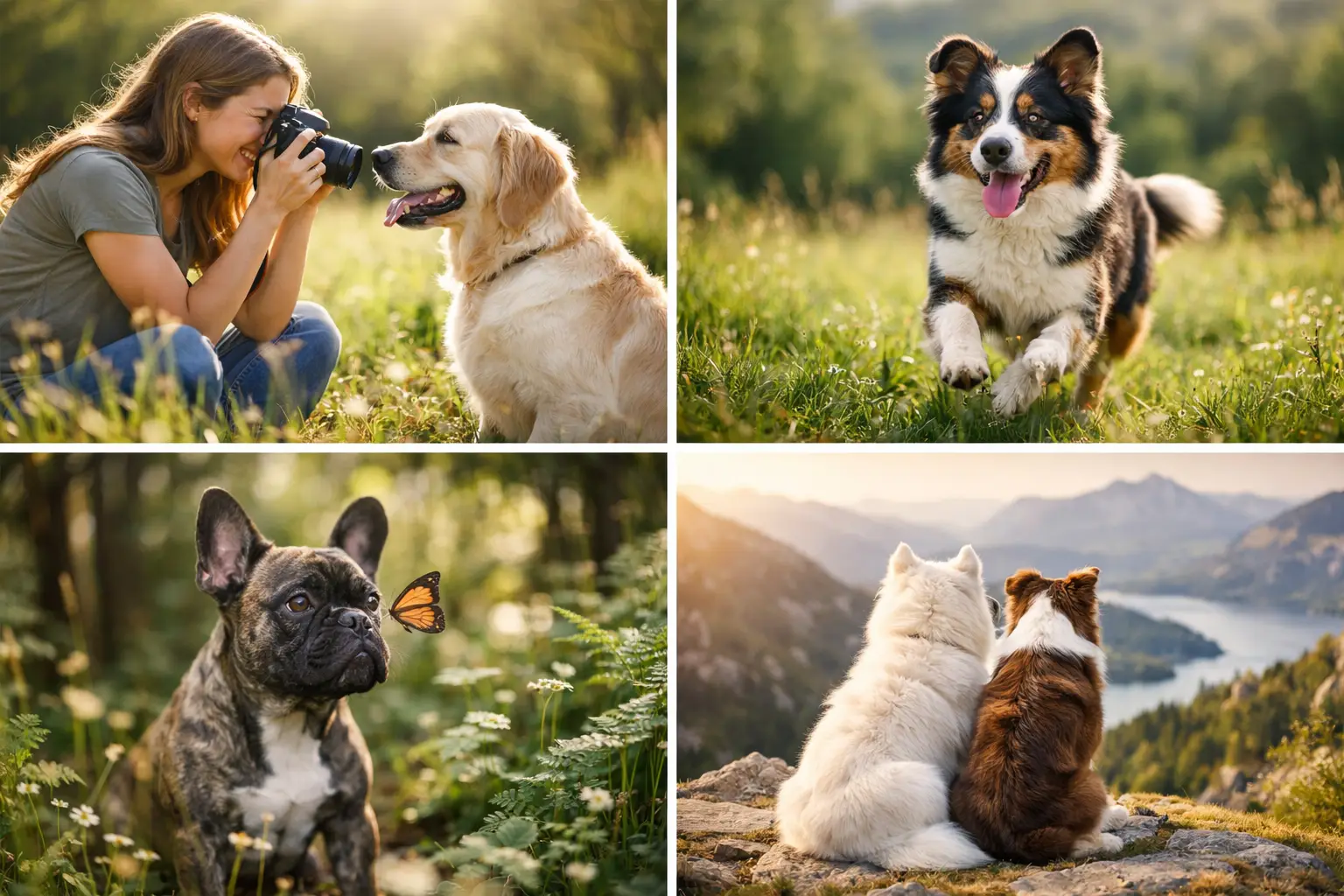
A dog rarely gives their best expression when asked to sit still and smile. The photographs that stay with you are usually the ones that feel like them: ears lifting at an interesting sound, muddy paws racing back to their person, or a quiet moment pressed against your leg. These dog photoshoot ideas outdoors are designed to celebrate that character, using fresh air, favourite places and plenty of room to simply be a dog.
Why outdoor dog portraits feel so personal
An outdoor session gives your dog something to do other than wonder why everyone is standing about with a camera. A familiar woodland path, a local beach or a favourite field can help them settle quickly, while natural light brings softness and texture to the finished images.
For families across the Scottish Borders, Edinburgh, the Lothians and Northumberland, the landscape can become part of the story too. A windswept hillside, autumn leaves or the gentle curve of a riverside walk says something about the life you share. You do not need a grand location, though. The place where your dog is happiest will nearly always photograph beautifully.
Dog photoshoot ideas outdoors for genuine moments
1. Start with a walk, not a pose
Begin as you normally would, walking together at an easy pace. This takes the pressure off both dog and owner, and often creates some of the most natural photographs of the session. A glance over a shoulder, a lead held loosely in hand, or your dog trotting confidently ahead can say far more than a formal seated portrait.
2. Let them run
If recall is reliable and the location is safe, a short burst of freedom creates wonderful energy. The trick is not to chase the perfect mid-air leap. Instead, photograph the whole feeling of it: the anticipation before the release, the race towards you, and the delighted pause afterwards.
A long training lead is a useful alternative where off-lead time is not appropriate. Safety always matters more than a photograph.
3. Include the people they love
Dogs are family, and portraits with their people often become the photographs that mean the most over time. Sit on a blanket, kneel for a cuddle, or walk hand in hand with your dog between you. There is no need for everyone to look at the camera. Looking at your dog usually creates a warmer, more honest image.
This is especially lovely for children and their first dog, or for an older dog whose familiar presence has shaped family life for years.
4. Find a quiet patch of long grass
Long grass catches the light beautifully, particularly towards the end of the day. It gives a dog space to sniff and explore while creating a soft, natural frame around them. This works well for a calm portrait too: ask for a simple sit or lie-down only after they have had time to take in their surroundings.
Avoid fields where livestock may be present, and be mindful of ticks during warmer months.
5. Make the most of woodland textures
Woodland sessions suit curious dogs brilliantly. Mossy logs, winding paths and dappled light add depth without taking attention away from the face that matters. A dog placing their paws on a fallen branch, peering through ferns or following a path towards their person can make a strong, story-led photograph.
Woodland light can be changeable, so it is a better choice for a relaxed, unhurried session than one built around fast action.
6. Bring their favourite ball or toy
A well-loved tennis ball, rope toy or frisbee can help draw out an expression you recognise immediately. It may earn a bright head tilt, a focused stare or a playful bounce. The toy does not need to appear in every frame, but it can be invaluable for keeping attention when needed.
Choose something small and familiar rather than buying a pristine new prop. A little wear and tear is part of its history.
7. Photograph the little rituals
The most meaningful outdoor portraits are not always the dramatic ones. Perhaps your dog waits patiently at a gate, carries a stick twice their size, drinks from a stream or checks in with you after every few steps. These everyday habits are the details you may miss most in years to come.
A thoughtful photographer will watch for them rather than constantly interrupting the moment.
8. Use water if your dog loves it
For some dogs, a beach, loch edge or shallow stream is pure joy. Splashes, wet whiskers and a sandy shake can bring a lovely sense of movement and personality to a gallery. Early morning or later afternoon usually gives the gentlest light, while quieter locations make it easier for an excited dog to stay focused.
Not every dog enjoys water, of course. There is no need to force an idea simply because it looks good on paper. The best session follows your dog, not a trend.
9. Choose an autumn leaf walk
Autumn offers rich colour without requiring elaborate styling. Let your dog wander through fallen leaves, sit beside a textured old wall or walk along a tree-lined track. A simple lead in a neutral colour can keep the scene feeling timeless, particularly if you would like to turn an image into framed wall art at home.
Do remember that darker afternoons arrive quickly, so timing is worth planning.
10. Capture the head tilt
The famous head tilt is not something to demand repeatedly. A soft squeak, an unusual word or a sound they recognise may bring it out naturally for a second or two. Have treats ready, keep the moment light, and stop before your dog loses interest.
One perfectly timed tilt is plenty. The real goal is an image that still makes you smile because it is unmistakably them.
11. Create a calm close-up among the adventure
Action photographs are fun, but a close portrait lets the personality in their eyes take centre stage. After a walk and a little play, many dogs are ready to pause beside their person. This is an ideal time for a gentle head-and-shoulders image, perhaps with a soft background of grass, trees or open sky.
For older dogs, these quieter portraits can feel particularly precious. There is dignity in a greying muzzle and wisdom in the eyes.
12. Photograph the journey home
The session does not have to end the moment the main portraits are done. A dog resting beside your boots, dozing on a blanket, or looking contentedly from the back of the car can be a lovely final chapter. These frames often feel wonderfully real because the excitement has passed and everyone has relaxed.
A little preparation goes a long way
You do not need matching outfits, complicated props or perfect obedience. A few small choices will help the experience feel easy. Give your dog a chance to burn off the first rush of energy before the session, but avoid a huge walk that leaves them tired. Bring water, treats, poo bags, a towel and a familiar toy, especially if you are heading to the coast or a muddy trail.
For your own clothing, choose layers and colours that sit comfortably in the landscape: soft greens, blues, creams, rusts and neutrals tend to work well. Most importantly, wear something you can sit, walk and cuddle in. If you feel comfortable, that ease shows in the photographs.
Scottish weather deserves a practical mention. A little cloud is often beautiful for portraits, and a light breeze can add movement to grass and fur. Heavy rain, strong winds or unsafe conditions are different matters. Flexibility is part of planning an outdoor session well, and occasionally the best decision is to wait for a kinder day.
Let your dog set the pace
A successful pet photoshoot is not measured by how long your dog stays in one position. It is measured by whether the experience feels enjoyable and whether the final images bring you back to the bond you share. Some dogs are lively performers; others need breaks, sniffing time and reassurance close to their person.
At Graeme Webb Photography, the aim is always to make space for those real moments rather than chasing stiff, overly posed pictures. The photographs can then live beyond a screen, whether that is in a keepsake album, a framed print in the hallway or a piece of wall art that makes you pause each time you pass it.
Bring the treats, embrace the muddy paws, and leave room for the unexpected. The small, unscripted moments are often where your dog’s story is waiting.