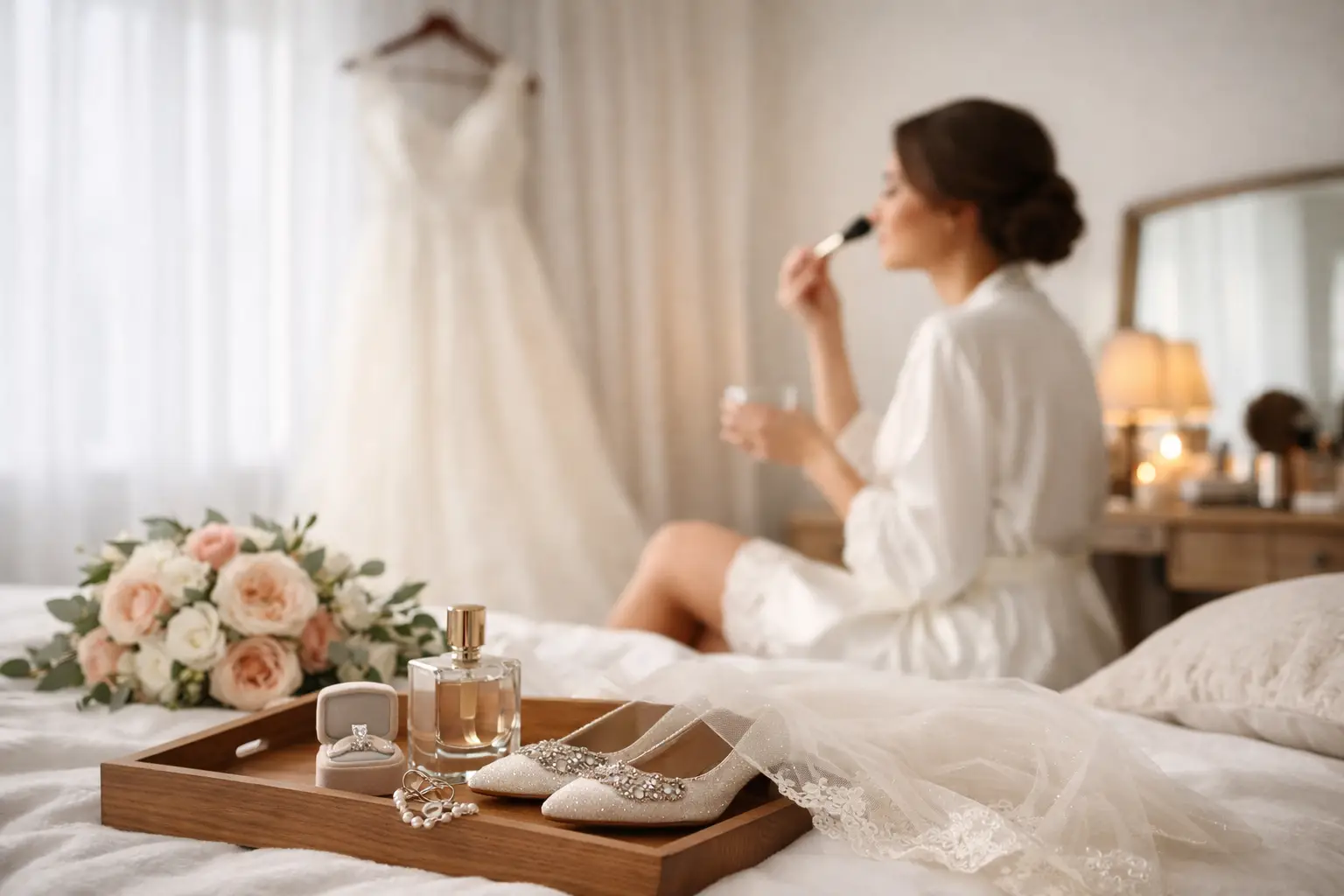
The wedding morning is where the day begins to feel real: the dress hanging quietly by the window, a parent taking a breath before seeing you ready, the familiar voices of your favourite people filling the room. A thoughtful bridal prep photo checklist helps protect those moments without turning the morning into a production. The aim is never to create a room full of poses. It is to leave enough space for the feeling of it all.
Why bridal preparation photographs matter
The getting-ready photographs often become some of the most personal images in a wedding album. Before guests arrive and before the timetable gathers pace, there is a rare pocket of time for anticipation, nerves, laughter and calm. It is also a chance to tell the story behind the ceremony: the details you chose, the people who helped you get there, and the small gestures that might otherwise pass in a blur.
Good preparation photographs do not require a perfectly styled morning. They need light, a little breathing room and a photographer who knows when to step back. A lived-in room, a half-finished cup of tea and happy chaos can be every bit as meaningful as immaculate details. The checklist below is a guide, not a set of rules. Make room for what matters most to you.
Your bridal prep photo checklist
Set aside the meaningful details
Before hair and make-up are in full swing, gather the items you would love photographed in one place. A clean bag, box or tray is helpful, particularly if the room is busy. It means there is no last-minute hunt through several handbags while everyone is trying to leave.
Consider including:
- Your wedding dress, veil, shoes and any special hanger
- Rings, jewellery, perfume and hair accessories
- Your bouquet, buttonholes and a spare ribbon if available
- Wedding stationery, such as invitations, vows, order of service or handwritten notes
- Sentimental pieces, including a locket, heirloom, borrowed item or a photograph of someone you wish could be there
- A small piece of tartan, family cufflinks or other details that reflect your Scottish, Northumbrian or family story
Not every item needs to be photographed, and more is not always better. Choose the pieces with a story attached. If your grandmother’s brooch is being pinned inside your dress, for example, that matters far more than adding every product from the dressing table.
Give the dress a moment of its own
Your dress deserves to be photographed before it is worn, ideally near a large window or in a quiet part of the venue. Ask a bridesmaid or family member to remove plastic covers, labels and packaging beforehand. If the dress is on a lovely hanger, brilliant, but a simple wooden hanger is often better than a branded plastic one.
The room does not have to be grand. What helps most is a clear area near good natural light. In a hotel suite, that may mean moving a couple of bags aside. At home, it could be a doorway, a curtain rail or a clean section of wall. On a wet Borders morning, even soft window light can be wonderfully flattering, so there is no need to worry if the sun is not making an appearance.
Keep one corner of the room clear
Wedding mornings are naturally busy. Make-up bags, outfit covers, breakfast plates and overnight luggage soon collect in every corner. You do not need to tidy the entire room, but keeping one area reasonably clear gives everyone a calm place for photographs.
This is particularly useful for the final stages of getting ready: fastening the dress, adding earrings, adjusting a veil or sharing a hug with a parent. Those moments are much easier to photograph beautifully when there is space to move and a little window light nearby.
If you are getting ready with a larger group, nominate one practical person to keep an eye on the room. They do not need to become a housekeeper for the morning. Simply gathering discarded bags to one side and checking that drinks are not balanced beside the dress can make a real difference.
Think about the people you want close by
The most moving preparation photographs are rarely about the outfit alone. They are about connection. Tell your photographer if there is someone whose reaction you especially hope to capture: a dad seeing you ready, a mum helping with a necklace, a grandparent arriving, a child in the wedding party, or the friend who has been beside you through every stage of planning.
It can also help to decide who will help you into your dress. This is not a formal job title. It is simply worth thinking about in advance, especially if the person needs to be dressed and ready themselves. If you would like a first look with your partner, bridesmaids or family, mention it early so it can happen without rushing.
Wear something you feel good in before the dress
There is no need for matching robes, though they can be lovely if they genuinely suit your group. Comfortable pyjamas, a favourite shirt or a simple button-through top work just as well. The practical point is to avoid pulling anything over your finished hair and make-up.
Choose something you are happy to be photographed in, but do not buy an outfit just for the camera. A wedding morning should still feel like you. The best images come when you can sit comfortably, have a laugh and forget the photographer is nearby.
Build in more time than you think you need
This is the part of any bridal prep photo checklist that brings the most calm. Hair and make-up often take longer than expected, particularly with a larger wedding party. Aim to be ready into your dress around 30 to 45 minutes before you need to leave for the ceremony, rather than at the exact moment the car is due.
That buffer allows time for the dress to be fastened without an audience checking watches, for a few relaxed portraits, and for the people around you to have their own final touches. It also gives you a moment to breathe. Your photographer can work around a lively room, but no one can create unhurried photographs from a timetable that has already slipped by half an hour.
Ask your hair and make-up artists for a realistic finishing order. Usually, the person getting married is ready later than bridesmaids or family members, which works well. The people helping you dress should ideally be almost finished before you step into the gown.
Do not forget food, water and music
A beautiful morning is harder to enjoy when you have only had a glass of fizz. Arrange an easy breakfast and keep water nearby, especially if you are wearing a fitted dress or travelling a distance to the ceremony. It sounds small, but being properly looked after helps you look and feel more like yourself.
A playlist can help settle the atmosphere too. Choose music that makes the room feel warm and familiar rather than adding another decision to make on the day. If there are young children around, a quiet corner, snacks and a trusted person to keep them occupied can be equally valuable.
What you can leave off the list
You do not need matching slippers, a dozen flat-lay props or a spotless suite to have meaningful getting-ready photographs. You also do not need to perform every emotion on cue. If you are naturally quiet when nervous, that is completely fine. If your morning is full of laughter and people popping in and out, that is fine too.
The trade-off is simple: elaborate styling can create a polished editorial look, while a more relaxed approach leaves greater room for real interactions. Neither is wrong. Let your priorities lead. If your photographs are meant to feel honest and timeless, choose the details and moments that genuinely belong to your day.
A gentle note for the morning itself
Once the details are gathered and the timings are in place, let the checklist go. Hand your mobile phone to someone else for a while, look around the room, and allow yourself to feel what is happening. Years from now, the photograph of a hand fastening your sleeve or a friend trying not to cry may mean more than any perfectly arranged shoe.
Your wedding morning does not need to be flawless to be beautiful. It only needs to be yours.