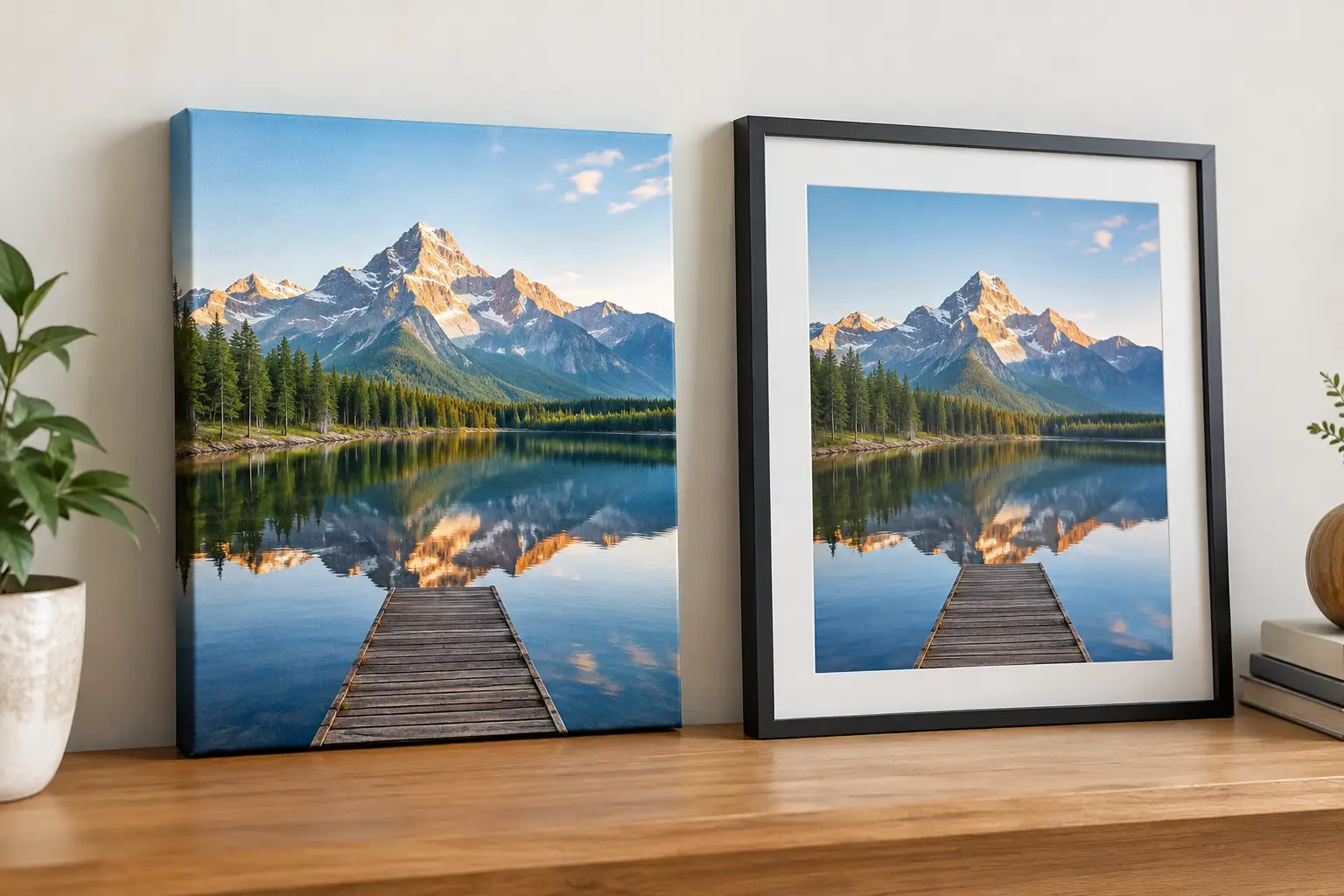
A photograph deserves more than a folder on your phone. It deserves to be part of the everyday moments that follow: the first coffee of the morning, the muddy paws racing through the hall, the quiet glance across the kitchen table. When choosing canvas prints versus framed prints, the question is not simply which one looks nicest. It is about how you want a memory to feel in your home.
Both can turn a favourite wedding image, family portrait or much-loved photograph of your dog into beautiful wall art. The right choice depends on the image itself, the room, and whether you are drawn to a softer, more contemporary finish or something with a little more definition and formality.
Canvas prints versus framed prints: the key difference
A canvas print is an image printed directly onto finely textured canvas, then stretched over a wooden frame. The photograph wraps around the edges, creating a clean, frameless look that sits slightly proud of the wall. It has an easy, tactile quality, and tends to feel relaxed and artistic.
A framed print places a photographic print behind glass or glazing and within a chosen frame. Mounting can add space around the image, while the frame itself becomes part of the overall design. It is a more traditional presentation, but far from old-fashioned when the materials and finish are chosen thoughtfully.
Neither is automatically the better option. A sweeping wedding landscape beneath a big Borders sky may sing on canvas, while a close, characterful portrait can look wonderful with a crisp mount and carefully selected frame. The important part is choosing a finish that supports the feeling in the photograph rather than distracting from it.
When canvas feels right
Canvas is often a lovely choice for images with movement, atmosphere and plenty of natural texture. Think of children running through long grass, a newly married couple walking away from their ceremony, or a family photograph filled with laughter rather than everyone looking directly at the camera. The woven surface gives these moments a painterly softness without changing what made them real.
It also works particularly well at larger sizes. A statement canvas above a sofa, bed or fireplace can fill a generous wall without appearing too heavy. Because there is no mount or outer frame, the image feels less enclosed and more immediate. This makes canvas especially useful in rooms with a relaxed, contemporary feel, or in homes where the wall art needs to sit comfortably alongside natural wood, soft furnishings and everyday family life.
Canvas has a forgiving quality too. It is less reflective than glazed artwork, so it can be a sensible choice for a bright room with large windows or changing daylight. There is no glass to catch the sun, and fingerprints are less of a concern in busy spaces.
That said, texture is part of the canvas look. For many images, that is exactly the appeal. If you love every tiny detail in a formal portrait, a highly detailed commercial image or a black-and-white photograph with fine tonal changes, you may prefer the sharper finish of a framed print.
Canvas suits a more relaxed style
A canvas print often feels as though the photograph belongs to the room rather than has simply been placed there. For informal family homes, it can make wall art feel warm and lived-in. It is also a thoughtful option for photographs that are emotional first and polished second: a windswept engagement portrait, a dog with its ears lifted in the breeze, or the moment a parent looks down at their newborn.
Why framed prints remain a favourite
Framed prints bring a sense of refinement and permanence. The frame creates a visual boundary around the image, which naturally draws the eye in. A mount adds breathing room and can make even a modest-sized photograph feel considered and important.
For wedding portraits, framed prints are particularly versatile. A timeless black-and-white image of the two of you, a carefully composed family group, or a quiet portrait taken after the ceremony can all look beautifully elegant when framed. The finish can be tailored to the home too: pale oak for a softer, Scandinavian-inspired room; black for a stronger contemporary contrast; or a classic neutral frame for an understated, enduring look.
Frames are also excellent for gallery walls. Mixing a handful of related photographs in matching frames creates a collection that tells more of the story. Rather than choosing one single hero image, you might combine the nervous smiles before a wedding ceremony, the confetti moment, and a portrait from golden hour. For families, a set can grow over time as children change and new milestones arrive.
The trade-off is practical as well as visual. Glazing can reflect light, particularly opposite windows or lamps, so placement matters. Framed artwork can also feel more formal than canvas, which may not suit every room or every image. A frame adds weight, literally and visually, and the wrong choice can overpower a gentle photograph.
Consider the photograph before the room
It is tempting to begin with the décor, but start with the image. Ask what made you stop when you saw it. Was it the connection between two people? The drama of the landscape? The little expression that captures your pet perfectly?
Images with broad skies, woodland, water, movement and soft natural light often suit canvas beautifully. The format gives them room to breathe. Portraits with strong eye contact, crisp detail, elegant posing or striking monochrome tones often benefit from the clarity and definition of a framed print.
Colour matters too. A canvas can soften bold colour slightly through its textured surface, which can be very appealing for warm, natural images. A framed photographic print tends to preserve a cleaner, more precise look, making it a strong fit for images where subtle colour grading and fine detail are part of the story.
There are exceptions, of course. A beautifully composed portrait can be spectacular on canvas, and a landscape can look stunning in a frame. The aim is not to follow a rule, but to honour the photograph and the place it will live.
Size and placement change everything
The most common wall-art regret is not choosing the wrong material. It is choosing a piece that is too small. A treasured image should not disappear on a large blank wall.
Above a sofa or bed, a single large canvas can create real impact. As a guide, the artwork should usually span a meaningful proportion of the furniture beneath it, rather than floating in the middle like an afterthought. In a hallway or stairwell, a run of framed prints can bring warmth to a space you pass through every day.
Before ordering, use low-tack masking tape or sheets of paper to mark the proposed size on the wall. Step back, view it from the doorway, then live with it for a day or two. This small exercise makes scale far easier to judge than relying on measurements alone.
Also consider viewing distance. A large canvas is made to be enjoyed from across a room, whereas smaller framed prints invite you to move closer. For an intimate newborn portrait or a detailed wedding image, that closeness can be part of the pleasure.
Think about the home you are creating
Your wall art does not need to match every cushion or paint colour. The photographs should outlast a redecorating phase. Instead, look for a finish that feels at home with the character of your space.
Canvas can soften a modern room and bring a little warmth to clean lines. It is often at its best where you want one image to make a calm, generous statement. Framed prints can echo existing wood finishes, add contrast to pale walls, or bring a more curated feel to a dining room, hallway or bedroom.
For a wedding photograph, consider where you want to revisit that day most often. A dramatic canvas in the living room may become part of the life you build together. A small, beautifully framed print beside the bed can feel more private and personal. There is no hierarchy between them, only different ways of living with your memories.
A final word on lasting value
The finest photographs are not only the ones that look beautiful when they are new. They become more meaningful as time passes. The children grow, beloved pets leave paw prints on your heart, and a wedding day becomes the beginning of a much bigger story.
Choose the piece that makes you want to pause when you walk past it. Whether that is the gentle texture of canvas or the timeless detail of a framed print, give the photograph a place in your home where it can keep telling its story.