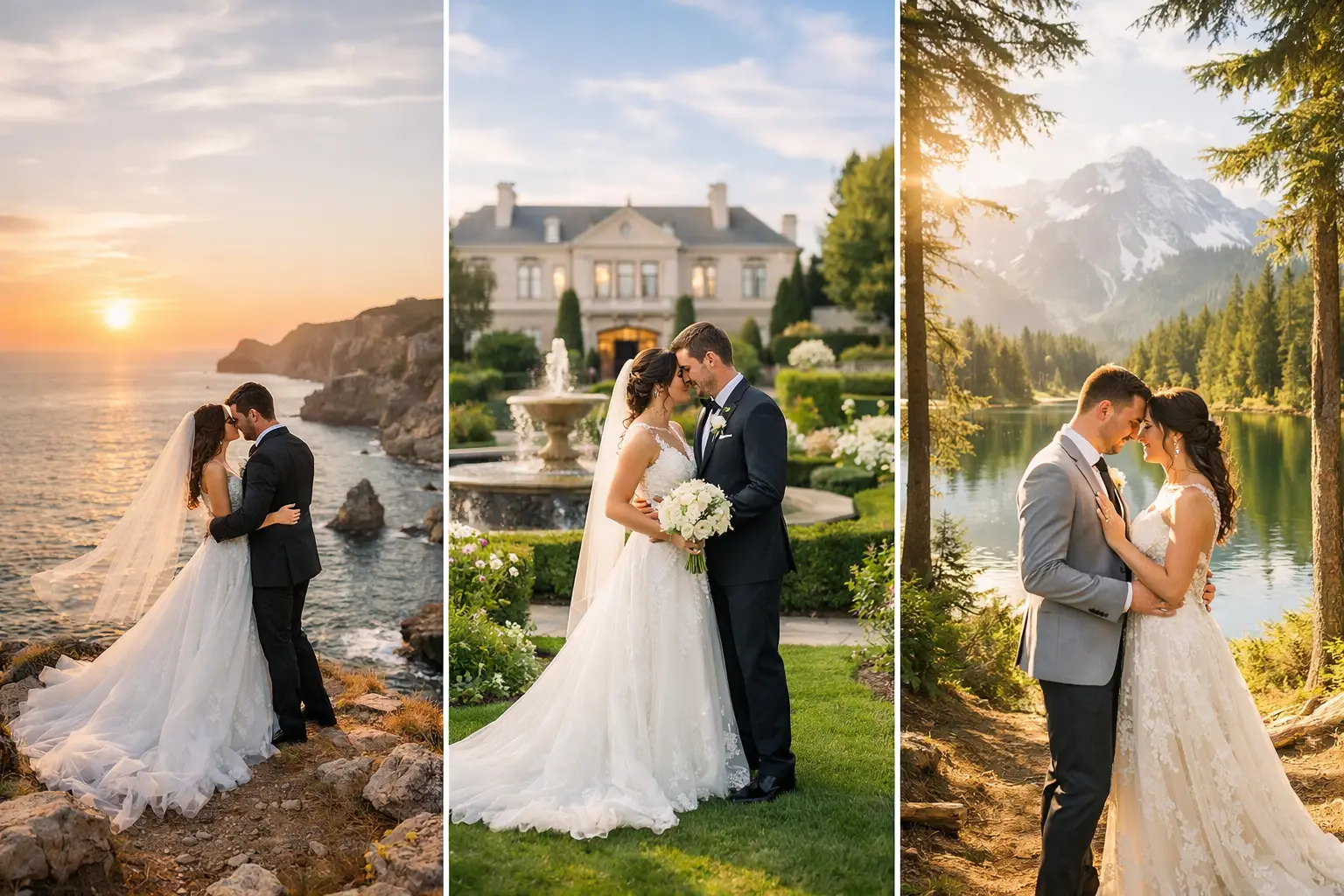
The best wedding photo locations are rarely the ones that look most impressive on paper. They are the places that give you space to breathe, flattering light, and a setting that feels like part of your day rather than a backdrop borrowed for five minutes. A dramatic staircase can be wonderful, and so can a windy patch of moorland, but the real question is simpler – will this place help you feel relaxed enough to be yourselves?
That matters more than many couples realise. Beautiful wedding photographs are not just made by scenery. They come from the mix of light, atmosphere, timing, and how comfortable you feel standing in that space together. A location can be grand, stylish, romantic, or wild, but if it leaves you squinting in harsh sun, fighting crowds, or feeling rushed, it may not give you the photographs you hoped for.
What makes the best wedding photo locations?
A strong wedding photo location does three jobs at once. It looks lovely, of course, but it also supports the flow of the day and gives variety without needing a long trek or a complicated plan. The best spots are often the ones that offer a few different looks within a short walk – a garden path, textured stone walls, open sky, a sheltered doorway, perhaps a view across the landscape.
Light is a huge part of it. Soft, even light is kind to skin tones and helps create that natural, timeless feel most couples want. That is one reason why tree-lined paths, courtyards, large windows, and lightly shaded outdoor spaces photograph so well. By contrast, an open area with no shade at midday can be far less forgiving, no matter how scenic it may be.
Privacy matters too. Not because every photograph needs to be taken in total seclusion, but because a little breathing room helps people settle. Couples often tell me they are not especially confident in front of the camera. A quieter corner away from guests can make all the difference. You stop performing and simply start being together.
The best wedding photo locations are not always the obvious ones
It is easy to focus on famous views or the grandest part of a venue. Sometimes those places are perfect. Other times, the best photographs come from a side path, a patch of soft evening light by a hedge, or a simple old doorway with character. Those quieter places often give a more honest sense of the day.
This is especially true across the Scottish Borders, Edinburgh, the Lothians, and Northumberland, where there is no shortage of beautiful scenery. Castles, country houses, hills, coastlines, woodland, and historic towns all offer something different. But not every striking location suits every wedding. A windswept clifftop might be magical for one couple and deeply stressful for another in formalwear on a cold afternoon.
That is why choosing a location should never be about chasing a certain style because it looked good elsewhere. It should reflect how you want your wedding photographs to feel. Romantic and elegant? Relaxed and natural? Editorial but still warm? The setting should support that mood rather than compete with it.
Venue grounds: the easiest win
If your venue has attractive grounds, that is often the best place to begin. It keeps things calm, avoids extra travelling, and gives you more time with guests. From a photography point of view, it also means less pressure. You are not trying to build a portrait session around traffic, parking, or a tight timeline.
Good venue grounds do not have to be enormous. A well-kept garden, a gravel drive, mature trees, or interesting architecture can be more than enough. Historic stone buildings are especially versatile because they add texture and depth in almost any weather. Even on a grey Scottish day, that kind of backdrop can feel rich and atmospheric rather than flat.
The real advantage is flexibility. If it rains, there may be covered walkways, porches, or window light indoors. If the weather breaks later, you can nip outside for ten minutes and make the most of it. Some of the most memorable portraits happen in those small pockets of time when the day briefly slows down.
Gardens and walled spaces
Gardens are a favourite for a reason. They soften a scene, flatter the light, and add colour without overwhelming the frame. Walled gardens can be especially lovely because they offer shelter from wind and a sense of intimacy that helps couples relax.
Historic architecture
Arches, staircases, old doors, and stone courtyards bring shape and character to photographs. They suit both classic portraits and more candid, story-led images. The key is not to overuse them. One elegant frame in a beautiful architectural spot is often stronger than twenty variations of the same pose.
Outdoor landscapes: beautiful, but it depends
There is something unforgettable about wedding portraits made against a big landscape. Rolling hills, open moorland, woodland tracks, and coastal views can add real emotion and scale. In the right light, these places feel cinematic without becoming overly staged.
But there are trade-offs. Landscapes can be exposed to wind, uneven underfoot, and less practical for older guests or couples in shoes chosen more for style than hill walking. Timing becomes more important too. The same hillside that looks glorious at sunset may feel harsh and awkward in bright midday light.
If you love the idea of dramatic outdoor portraits, it often works best to keep it simple. Choose one location with easy access rather than trying to fit in several. Allow proper time. And think about comfort as much as scenery. If you are relaxed, warm enough, and not worrying about mud on your hem, the photographs will show it.
Town and city settings for a more modern feel
Not every couple wants sweeping countryside. Some prefer the shape and energy of a town or city setting – cobbled streets, elegant Georgian architecture, hidden closes, old stone lanes, or a clean contemporary backdrop. These locations can feel stylish and personal, especially if they connect with your story.
Urban locations often work well for shorter portrait sessions because there is usually a lot of visual variety packed into a small area. A single street might offer classic architecture, softer side light, and sheltered corners if the weather turns. The challenge is usually people. Busy public spaces can make it harder to create a quiet moment, so timing is everything.
Early evening can be ideal. The light is gentler, the pace often slows a little, and there is a sense of movement around you without it taking over the photograph. That balance can create images that feel full of life while keeping the focus where it belongs.
Don’t overlook indoor locations
Indoor photo locations are often treated as the backup plan, which is a shame. Some of the most timeless wedding photographs happen indoors, especially in places with beautiful window light, textured interiors, and a calm atmosphere. Think panelled rooms, soft neutral walls, stair landings, entrance halls, libraries, and even simple corners with good light.
This is particularly useful in Britain, where the weather does what it pleases. A strong indoor option means you can stop worrying about forecasts quite so much. Rain on a wedding day does not ruin photographs. Poor light and panic do. A good photographer will look for spaces that feel natural, flattering, and true to the mood of the day.
How to choose the right spot for you
The best approach is to think less like a tourist and more like a storyteller. Ask which places fit the pace of your day, the season, and your personalities. If you are both private people, a secluded garden or quiet woodland edge may suit you better than a busy landmark. If you love atmosphere and heritage, old stone buildings and formal grounds may feel just right.
It also helps to think about your finished photographs, not just the experience in the moment. A location with too many distractions can date quickly. A setting with simple elegance, good light, and emotional honesty tends to last. That matters when these images are going into albums, onto walls, and becoming part of your family story.
At Graeme Webb Photography, this is often part of the conversation before the day itself – not just where photographs can be taken, but where they will feel most natural. The right location should never add pressure. It should help you settle in, enjoy a quiet moment together, and come away with images that still feel like you years from now.
If you are choosing between several lovely options, trust the one that makes the day feel easier, calmer, and more like your own. The most meaningful photographs usually begin there.