The morning rarely feels as long as you think it will. Hair and make-up can run late, someone misplaces a buttonhole, and before you know it, the ceremony is half an hour away. That is why when should wedding photos start is such a useful question to ask early on. The right start time does more than shape your gallery – it changes how calm, connected, and present you feel throughout the day.
For most weddings, photography should begin around 2 to 3 hours before the ceremony. That usually gives enough time to capture the atmosphere of the morning, the details you have chosen so carefully, and those lovely in-between moments with the people getting ready beside you. But like most parts of a wedding, there is no one-size-fits-all answer. The best timing depends on the shape of your day, what matters most to you, and how relaxed you want the whole experience to feel.
When should wedding photos start for most couples?
A good rule of thumb is to have your photographer arrive when the final stages of getting ready are beginning rather than at the very start of the morning. In practical terms, that often means arriving when hair and make-up are mostly done for one person, but there is still enough time to photograph finishing touches without anyone feeling rushed.
If your ceremony is at 1pm, photography might start around 10am or 10.30am. If your ceremony is at 3pm, a start around midday is often ideal. This gives space for detail photographs, candid moments, getting dressed, and a few portraits before you leave.
Starting too early can leave you with a lot of repetitive preparation images and a very long day on camera. Starting too late can make the morning feel hurried and mean some of the most emotional moments are missed entirely. The sweet spot is somewhere in the middle – enough time for the story to unfold naturally, without turning the whole morning into a photoshoot.
Why the getting ready part matters
Some couples wonder whether preparation coverage is really necessary. If you are drawn to natural, story-led photography, the answer is usually yes. The morning is often where the nerves, excitement, laughter, and anticipation live most openly.
There is something special about the quieter moments before everything begins properly. A parent fastening a necklace. Friends sharing a joke while shoes are kicked off in the corner. A last look in the mirror before heading downstairs. These photographs add emotional depth to your gallery because they show not just how the day looked, but how it felt.
They also help tell the story properly. A wedding album flows beautifully when it begins with the atmosphere building, rather than opening abruptly at the aisle.
What can be photographed during the morning?
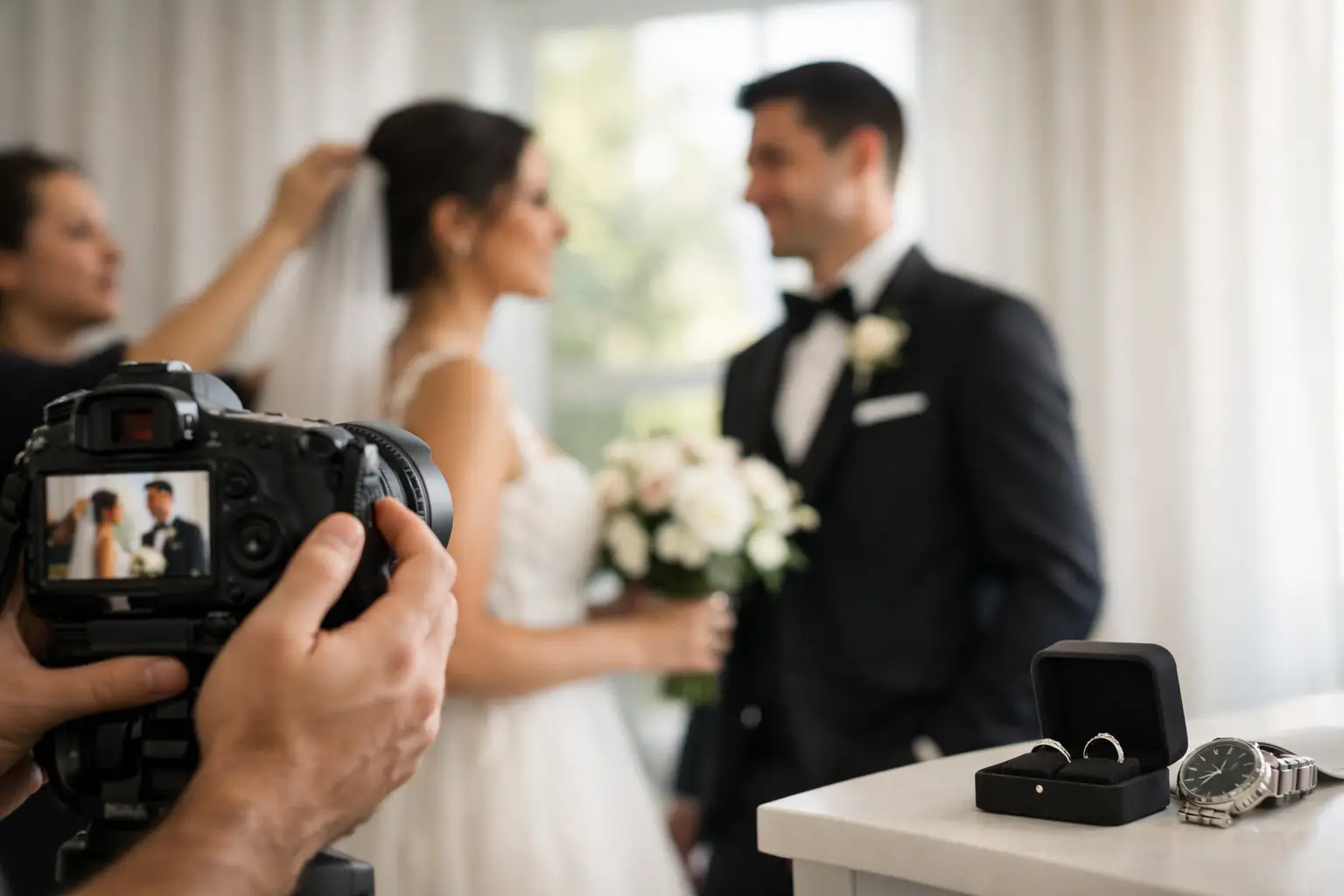
This part of the day is rarely about posing for hours. It is about documenting what is already happening, with a little gentle direction when needed. That can include your dress, shoes, jewellery, flowers, invitation suite, cufflinks, the room itself, make-up finishing touches, people helping you get dressed, and those natural interactions around it all.
If one partner is getting ready nearby, it may also be possible to include a little coverage there too. That depends on distance, timings, and how important that part of the story is to you.
Factors that affect when wedding photos should start
The ceremony time is the obvious one, but it is not the only one. Your venue, travel plans, the size of your wedding party, and the kind of coverage you want all make a difference.
If you are getting ready at the same venue where the ceremony is taking place, the morning tends to run more smoothly. There is less travelling, fewer moving parts, and a bit more breathing room. In that case, a slightly later start can still work well.
If you are getting ready elsewhere and need to travel, it is wise to build in more time than you think you need. Roads are not always kind, and wedding mornings have a habit of slipping away quickly.
Large bridal parties usually need more time too. More people means more logistics, more interactions, and often more chance of delays with hair, make-up, dressing, and transport. A smaller, more intimate wedding can often move at a gentler pace.
Then there is the question of what you value most. If the photographs of details and preparation are deeply important to you, start earlier. If you are less fussed about the early part of the day and would rather focus on the ceremony, family groups, and the celebration afterwards, a later start may be absolutely fine.
When should wedding photos start if you want a relaxed day?
If your priority is to feel calm, not hurried, it is usually better to start a little earlier than feels strictly necessary. Not dramatically earlier, but enough to create breathing room.
A relaxed wedding day rarely happens by accident. It comes from good planning, realistic timings, and leaving space for real life. If someone is late, if the weather changes, or if emotions run high for a few minutes, you want a timetable that can absorb that without everyone watching the clock.
This is especially true if you want natural photographs. Authentic moments need room. If every part of the day is squeezed into tight ten-minute slots, the photography can begin to feel transactional. When there is a bit of margin, people settle, and that is when the most genuine images tend to happen.
A simple way to plan your start time
A helpful approach is to work backwards from the ceremony. Think about when you need to leave for the venue, then allow time for getting dressed, a few portraits, and the final parts of hair and make-up. Once you have that, add enough time at the beginning for details and the atmosphere of the morning.
For many couples, that looks something like this: leaving 30 to 45 minutes before the ceremony, getting dressed around 45 minutes before departure, and photography beginning 2 to 3 hours before that. It is not a rigid formula, but it is a sensible place to start.
The key is not to cram every possible photo into the schedule. It is to create a flow that lets the story unfold naturally.
Morning timing example
For a 2pm ceremony, photography might begin at 11am. That allows time for details and candid preparations, getting dressed around 12.30pm, a few portraits, and departure around 1.15pm. If travel is longer or the wedding party is larger, you may want to shift that earlier.
Common timing mistakes to avoid
One of the biggest mistakes is assuming the morning will run exactly to plan. It rarely does. Hair and make-up often need a little extra time, and simple tasks can take longer when emotions are high.
Another is leaving no buffer for getting dressed. This is often one of the most meaningful parts of the morning, and it deserves more than a frantic five minutes.
It is also easy to underestimate how long family members need, especially if children or elderly relatives are involved. A thoughtful schedule should feel supportive, not overly ambitious.
Finally, some couples worry that starting earlier means being photographed constantly. In reality, good wedding photography should never feel intrusive. There are moments for gentle guidance, but much of the time your photographer is simply observing, noticing, and preserving what is already there.
It depends on the kind of story you want told
If you want your gallery to feel complete, with all the little threads that make the day yours, starting before the ceremony matters. If you are happy with a shorter record focused on the main events, later coverage can work.
Neither choice is wrong. It is simply about what you want to remember years from now. The laughter in the morning room. The buttoning of a sleeve. The quiet pause before the door opens. These moments may seem small at the time, but they often grow in meaning afterwards.
That is why this conversation is worth having with your photographer well before the wedding. An experienced photographer will help shape a timeline that suits your day rather than forcing your day to fit a standard template. At Graeme Webb Photography, that is always part of the process – making sure your coverage feels personal, relaxed, and true to you.
The best start time is the one that gives your day space to breathe. If your photographs begin with calm rather than chaos, you will not just see the difference in the gallery – you will feel it on the day itself.