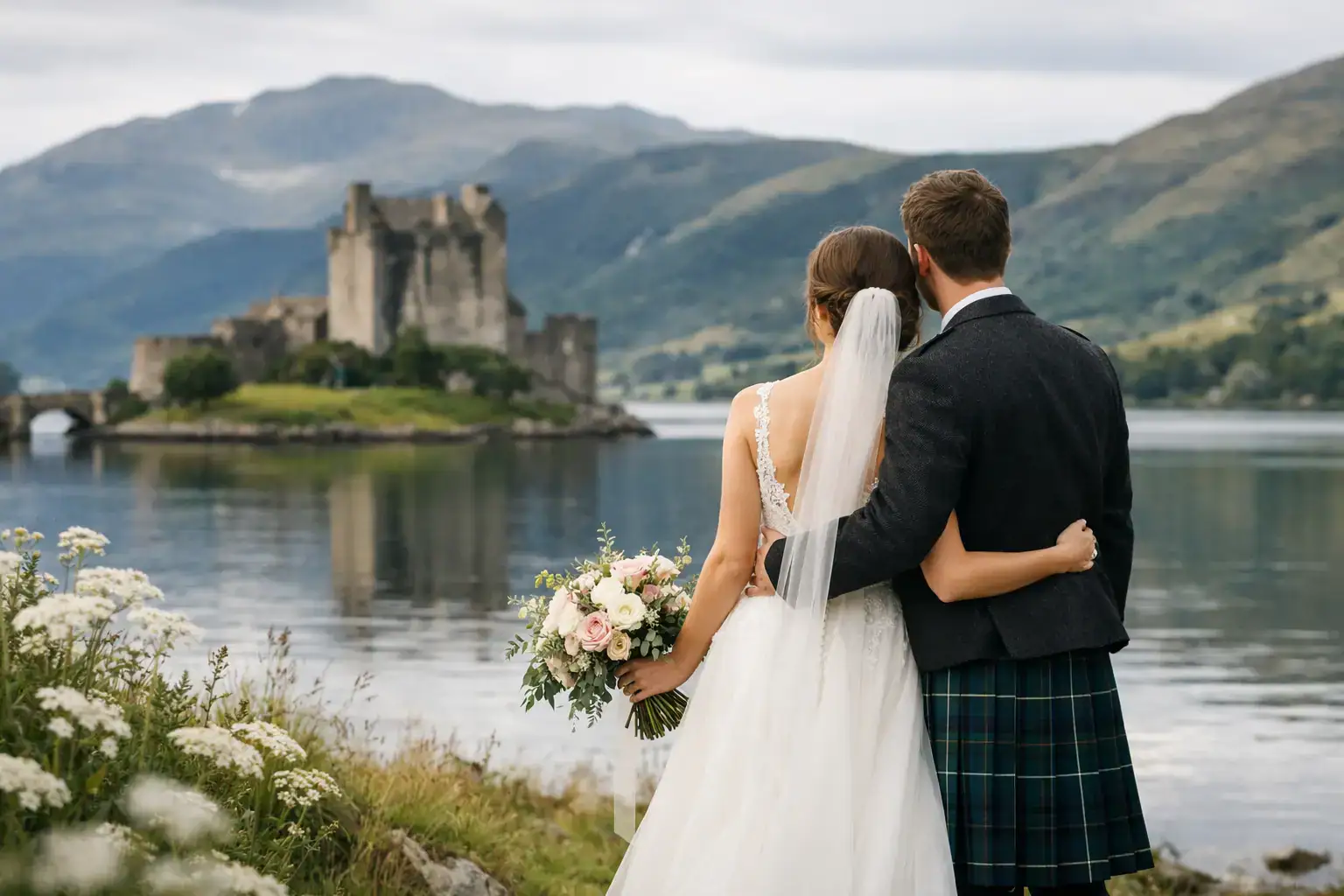
There is a particular kind of light you get in Scotland just before the weather turns – soft, silvery, a little unpredictable, and far more beautiful than anything you could stage. For couples drawn to fine art wedding photography Scotland offers something genuinely special: dramatic landscapes, historic venues, and a mood that lends itself perfectly to romantic, story-led images that still feel real.
Fine art wedding photography is often misunderstood. Some hear the phrase and picture stiff poses, perfection over personality, or images that look lovely but feel distant. In practice, the best fine art approach is much more human than that. It is about creating photographs with elegance and intention, while still holding on to the emotion of the day as it truly unfolds.
What fine art wedding photography means
At its heart, fine art wedding photography is about more than recording events. It is about noticing shape, light, atmosphere, colour, and feeling, then bringing those elements together in a way that feels timeless. The photographs are carefully composed, but they should never feel forced. They are polished without losing warmth.
That matters on a wedding day because the moments you treasure most are rarely the ones you can choreograph completely. It might be the look on your partner’s face during the vows, your mum steadying herself before seeing you dressed, or a burst of laughter just after the ceremony when everyone finally exhales. A fine art style gives those moments beauty and breathing room, rather than treating them like a checklist.
For many couples, the appeal lies in balance. You want photographs worthy of an album on the coffee table and prints on the wall, but you also want to recognise yourselves in them. Not a version that has been over-directed or polished until it feels unfamiliar. The strongest work sits right in that middle ground – natural, refined, and full of life.
Why fine art wedding photography in Scotland feels so distinctive
Scotland brings its own character to wedding photography. The landscape does some of the heavy lifting, of course, from rolling Borders countryside to Edinburgh architecture, coastal wind, old stone venues, and gardens that seem to change colour by the hour. But it is not only about scenery. It is also the atmosphere.
Scottish weddings often have a lovely mix of elegance and informality. You may have an incredible setting and beautifully chosen details, yet the day itself still feels warm, relaxed, and full of personality. That suits fine art photography beautifully because the style thrives when there is both visual beauty and genuine connection.
The weather plays a part too. Bright sunshine can be wonderful, but softer overcast light is often kinder for portraits, more flattering for skin tones, and better at preserving detail in dresses and surroundings. A misty afternoon or a dramatic sky can bring texture and romance that a cloudless day simply cannot. The trade-off, of course, is unpredictability. A photographer working in Scotland needs to be comfortable adapting quickly, finding shelter when needed, and seeing creative possibilities rather than problems.
The difference between fine art and overly posed
This is where couples often hesitate, and fairly so. If you are not comfortable in front of the camera, the idea of an artistic photography style can sound intimidating. You might worry that you will be expected to perform all day or spend hours being arranged into unnatural positions.
A thoughtful fine art approach should feel nothing like that. Good direction is gentle. It helps you relax, gives you something simple to do with your hands, and places you in the best light without making every moment feel managed. Instead of asking you to hold a smile for too long, your photographer may prompt movement, conversation, or quiet closeness. The result feels softer, more personal, and far less self-conscious.
There is a difference between being posed and being guided. Most couples need a bit of reassurance, especially for portraits, and that is completely normal. The skill lies in offering enough direction to create beautiful images while leaving enough space for real expression to appear.
What to look for in a fine art wedding photographer in Scotland
Style is the obvious starting point, but it should not be the only one. When you are choosing someone to photograph your wedding, look beyond a few standout images on a homepage or social feed. Pay attention to full galleries. Can they photograph consistently in different weather, venues, and seasons? Do the quiet moments feel as strong as the dramatic ones?
It is also worth asking how the photographer works on the day. If you value a calm, relaxed atmosphere, the experience matters just as much as the final gallery. A beautifully artistic portfolio means very little if the person behind the camera makes you feel rushed or awkward. The best photographers bring a steady presence. They know when to step in and when to stand back.
For many couples across the Borders, Edinburgh, the Lothians and Northumberland, local knowledge can make a real difference too. Knowing how the light falls at a particular venue, where to go if the rain arrives, or how to build a comfortable timeline around travel and Scottish weather all helps the day run more smoothly. That confidence tends to show in the photographs.
Fine art wedding photography Scotland couples can actually live with
One of the loveliest things about fine art wedding photography Scotland couples often appreciate is how well it translates into print. Trends come and go. Heavy editing styles date quickly. Images made with care, natural tones, and an eye for lasting beauty tend to age far better.
That matters because wedding photographs are not only for the week after the wedding, when everyone is still glowing and posting favourites online. They are for ten years from now, when your home has changed, your lives have changed, and the images have become part of your family history. An album should feel just as meaningful then as it does now.
This is one reason finished artwork matters so much. A photograph seen once on a screen is not quite the same as a print held in your hands or displayed on the wall. Fine art photography has a natural home in physical form because it is created with legacy in mind. The details, tones, and emotion deserve more than a quick scroll.
Planning for the best photographs without losing the day
There is always a balance to strike between creating space for beautiful images and staying present in your wedding. Most couples do not want to disappear for hours, and they should not have to. A well-planned timeline makes room for the essentials without turning the day into a photo shoot.
Good preparation usually starts with the light. If possible, setting aside even ten or fifteen minutes for portraits later in the day, when the sun is lower or the sky has softened, can make a huge difference. It also helps to keep group photographs organised and realistic. Too many combinations can eat into the time you would rather spend with your guests.
If your venue has beautiful grounds, old interiors, or surrounding views, let that work for you rather than trying to cram in multiple locations. Some of the most elegant wedding photographs come from staying present in one setting and allowing the day to breathe. More movement is not always better.
A calm photographer can help with this enormously. Graeme Webb Photography, for example, builds the experience around natural connection and genuine feeling, so couples do not feel pulled away from their own wedding in the pursuit of perfect images. That balance is often what makes the final gallery feel both polished and deeply personal.
Is fine art wedding photography right for every couple?
Not always, and that is fine. If you love high-energy, heavily editorial fashion imagery with lots of direction, your version of fine art may look different from someone else’s. If you want every moment photographed in a completely hands-off documentary way, you may prefer a photographer who intervenes less during portraits and details.
For many couples, though, fine art is appealing precisely because it is not one extreme or the other. It offers beauty without coldness, storytelling without chaos, and direction without pressure. If you want your photographs to feel romantic, natural, and carefully crafted, it is a very comfortable place to land.
The key is finding a photographer whose interpretation of the style matches your personality. Some fine art work leans very editorial. Some feels softer and more intimate. Some is light and airy, while some embraces richer tones and moodier Scottish skies. None is automatically right or wrong. What matters is whether it feels like your day, your relationship, and the way you want to remember it.
When you look back on your wedding photographs, you should not only admire them. You should feel them. If the images carry the atmosphere of the day, the people you love, the quiet in-between moments and the grand ones alike, then they have done far more than document an event. They have given you something lasting, something honest, and something worth returning to for years to come.