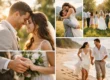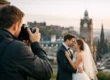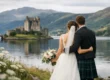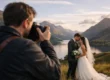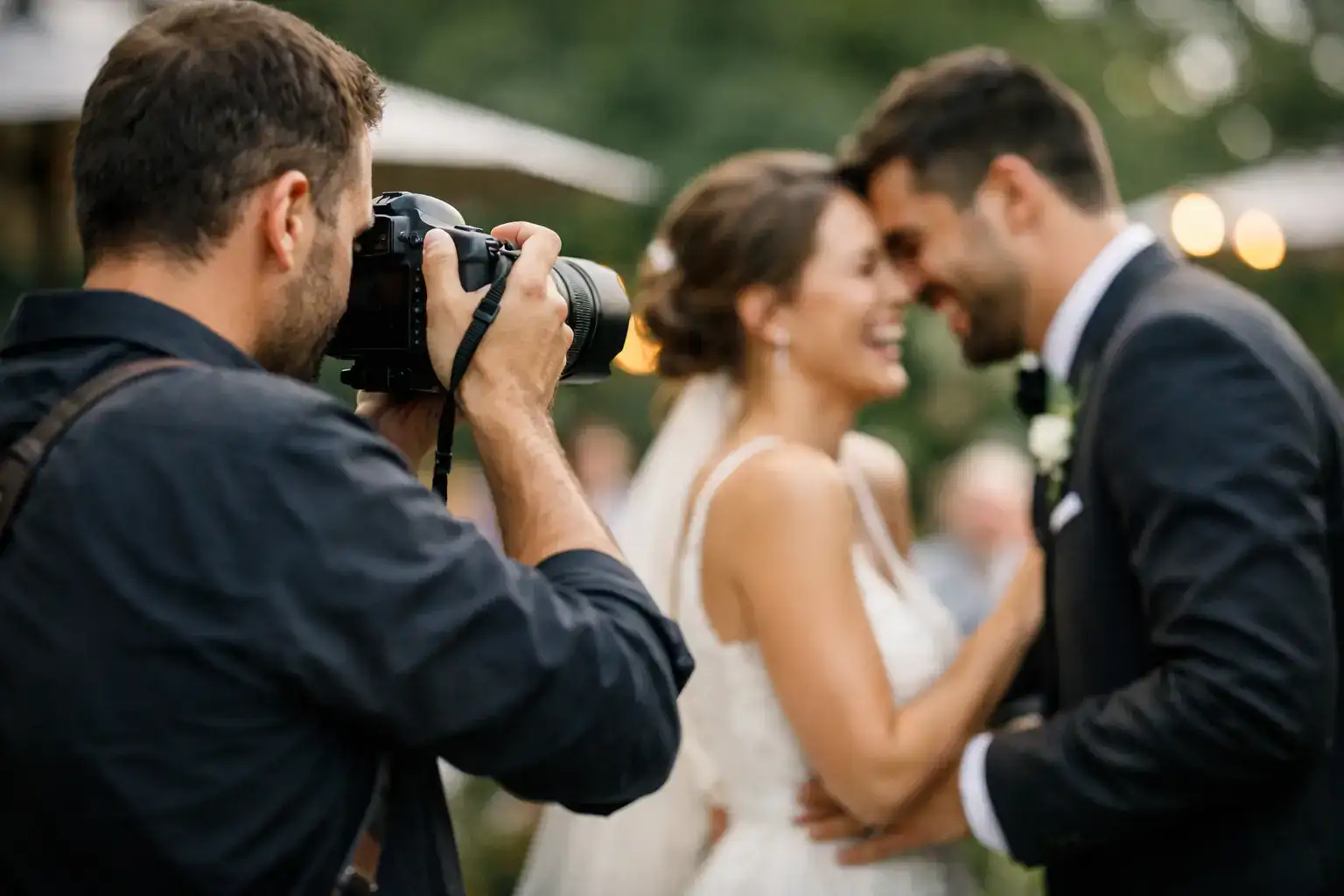
You are halfway through your vows, trying not to well up, and across the aisle your gran is dabbing her eyes with a tissue. A flower girl has lost interest entirely and is studying her shoes. Your partner is smiling in that way they only do when they are trying to hold it together. That is the heart of what is documentary wedding photography – not a day interrupted for endless posing, but a day observed with care, so the photographs feel like your wedding rather than a photoshoot built around it.
For many couples, the appeal is simple. You want to remember how it all felt. Not just how the dress looked on a hanger or where everyone stood for the confetti line, but the nerves, the laughter, the fleeting glances and the small in-between moments you did not even realise were happening. Documentary wedding photography is about telling that story honestly.
What is documentary wedding photography?
Documentary wedding photography is a natural, unobtrusive approach to photographing a wedding day. Instead of directing every moment, the photographer observes what is unfolding and captures it as it happens. The aim is to preserve the atmosphere, relationships and emotion of the day in a way that feels real.
You might also hear it called reportage wedding photography or candid wedding photography, although there can be slight differences in how photographers use those terms. In practice, the idea is much the same – genuine moments come first.
That does not mean there is no skill or intention behind it. Quite the opposite. A strong documentary photographer is constantly reading the room, anticipating reactions, noticing light, movement and connection, and quietly placing themselves where the story is about to happen. The work is thoughtful, but it should never feel intrusive.
What documentary wedding photography looks like in real life
On a wedding day, this style often begins long before the ceremony. During preparations, it might mean photographs of your mum fastening your dress, your best man trying to sort buttonholes, or a quiet moment when everything suddenly feels real. None of it needs staging to matter.
Through the ceremony and speeches, documentary coverage becomes even more powerful. These are moments that cannot be repeated, and the strongest images usually come from real reactions rather than prompts. A squeeze of the hand. A tear quickly wiped away. A burst of laughter that ripples across the room.
Later, when the formalities ease off, the day opens up even more. Guests hug, children charge about, friends tell stories at the bar, and the dance floor takes on a life of its own. A documentary approach allows all of that personality to stay intact.
The result is a gallery that feels alive. You are not simply looking at what happened. You are brought back into it.
Why couples are drawn to documentary wedding photography
A lot of couples worry about being awkward in front of the camera. That is completely understandable. Most people are not models, and most do not want their wedding to feel like a long performance.
This is one reason documentary photography resonates so strongly. It takes pressure off. You are not expected to spend the day thinking about your hands, your smile or whether you are standing at the right angle. Instead, you can focus on being present with the people you love.
There is also something timeless about honest photographs. Trends in editing and posing come and go, but genuine emotion tends to hold its value. Years from now, the images that often mean the most are not always the most polished ones. They are the ones that show who was there, how they looked at you, and what the day really felt like.
For couples planning a wedding in the Scottish Borders, Edinburgh, the Lothians or Northumberland, there can be another advantage too. Weather, venues and natural light can all shift quickly. A documentary mindset allows for flexibility. Rather than forcing the day into a rigid shot list, the photographer works with what is unfolding naturally.
Does documentary mean no posed photos?
Not necessarily, and this is where it helps to be clear.
When couples ask what is documentary wedding photography, they sometimes imagine a photographer who never speaks, never helps and never takes a family group photo. In reality, most documentary wedding photographers still include some gentle direction when it is useful.
Family photographs are a good example. These are important keepsakes for many couples, and a calm bit of organisation helps them run smoothly. The same goes for a short portrait session with the two of you. Even if the overall style is documentary, you may still want a little time away from the crowd for relaxed, natural portraits.
The difference is in how that direction feels. It is usually light-touch and efficient, not stiff or over-managed. You are guided into good light, encouraged to walk, chat or simply be together, and then given room to settle into yourselves. The result still feels honest.
A good photographer will explain where they sit on that spectrum. Some are almost entirely hands-off. Others blend documentary coverage with a few editorial or fine-art touches. Neither is wrong. It depends on your priorities.
The strengths of a documentary approach
The biggest strength is emotional truth. Documentary wedding photography can capture the day as it was, rather than as it was arranged to look. That matters because weddings are full of nuance. Joy and nerves often sit side by side. Big moments happen, but so do tiny ones, and the tiny ones can carry just as much meaning.
It is also a more relaxed way to experience your wedding. If you do not want hours of staged images, this approach protects your time. You spend more of the day with your guests and less of it being moved from one backdrop to another.
Then there is the storytelling element. A gallery built documentary-style tends to have rhythm. It shows the build-up, the anticipation, the release, the warmth, the chaos, the calm. When turned into an album, those moments often sit beautifully together because they are connected by real events rather than disconnected poses.
The trade-offs to understand
As lovely as documentary photography can be, it is not magic, and it is worth being honest about the trade-offs.
Because the focus is on real moments, you are relying on what genuinely happens. If a couple keeps apart all morning, there will be fewer emotional preparation images between them. If guests are reserved, the coverage may feel quieter than a wedding where everyone wears their heart on their sleeve. That does not make the story less meaningful, but it does shape the final gallery.
You may also have less control over every image. Documentary photographs are often beautiful because they are spontaneous, but spontaneity can be messy. Backgrounds are not always perfect. Hair moves. Children pull faces. A room may be dim. A strong photographer works with all of that, but the charm comes partly from the fact that life is not immaculate.
If you love highly styled, fashion-led portraits and want lots of them, a pure documentary approach might not be the best fit on its own. In that case, a blended style could suit you better.
How to know if this style is right for you
If you care most about real emotion, natural interactions and photographs that feel personal, documentary wedding photography is likely to appeal. It is especially well suited to couples who want to enjoy their day without constant interruption.
It can also be the right fit if you are camera-shy. Many people relax once they realise they do not need to perform. They just need to be present.
On the other hand, if you have a very specific vision for lots of styled shots, or if polished posing matters more to you than candid storytelling, you may want a photographer who leans further in that direction. The key is not chasing a label. It is finding someone whose work feels the way you want your memories to feel.
When you look through full wedding galleries, pay attention to more than the hero shots. Notice whether the images make you feel something. Do the people in them seem comfortable? Can you sense the energy of the room? That will tell you far more than a handful of highlights ever could.
What is documentary wedding photography really about?
At its core, it is about trust. Trusting your photographer to see the moments that matter. Trusting yourselves to be fully in the day rather than stepping outside it. Trusting that the most meaningful memories are often the ones you cannot script.
At Graeme Webb Photography, that belief sits at the centre of a story-led approach – creating photographs that feel warm, honest and lasting, then turning them into albums and artwork you will actually live with for years.
If you are choosing your wedding photography now, perhaps the best question is not which style sounds fashionable, but which one feels most like you. The right photographs should not just show your wedding. They should let you feel your way back to it, years down the line, with all the warmth still intact.