A family photograph can live happily on a phone for a while, then quietly disappear beneath thousands of screenshots, school notices and everyday snapshots. An album asks something different of your images. It gives them a place to be held, revisited and passed around the kitchen table. This guide to heirloom family albums will help you create a book that feels less like a product and more like part of your family story.
A beautifully made album is not about preserving a perfectly polished version of family life. The photographs that matter most are often the ones that bring back a feeling: your toddler’s determined little stride, the way the dog insists on joining every cuddle, a grandparent laughing when they thought nobody was looking. Those are the moments worth giving a permanent home.
What makes a family album an heirloom?
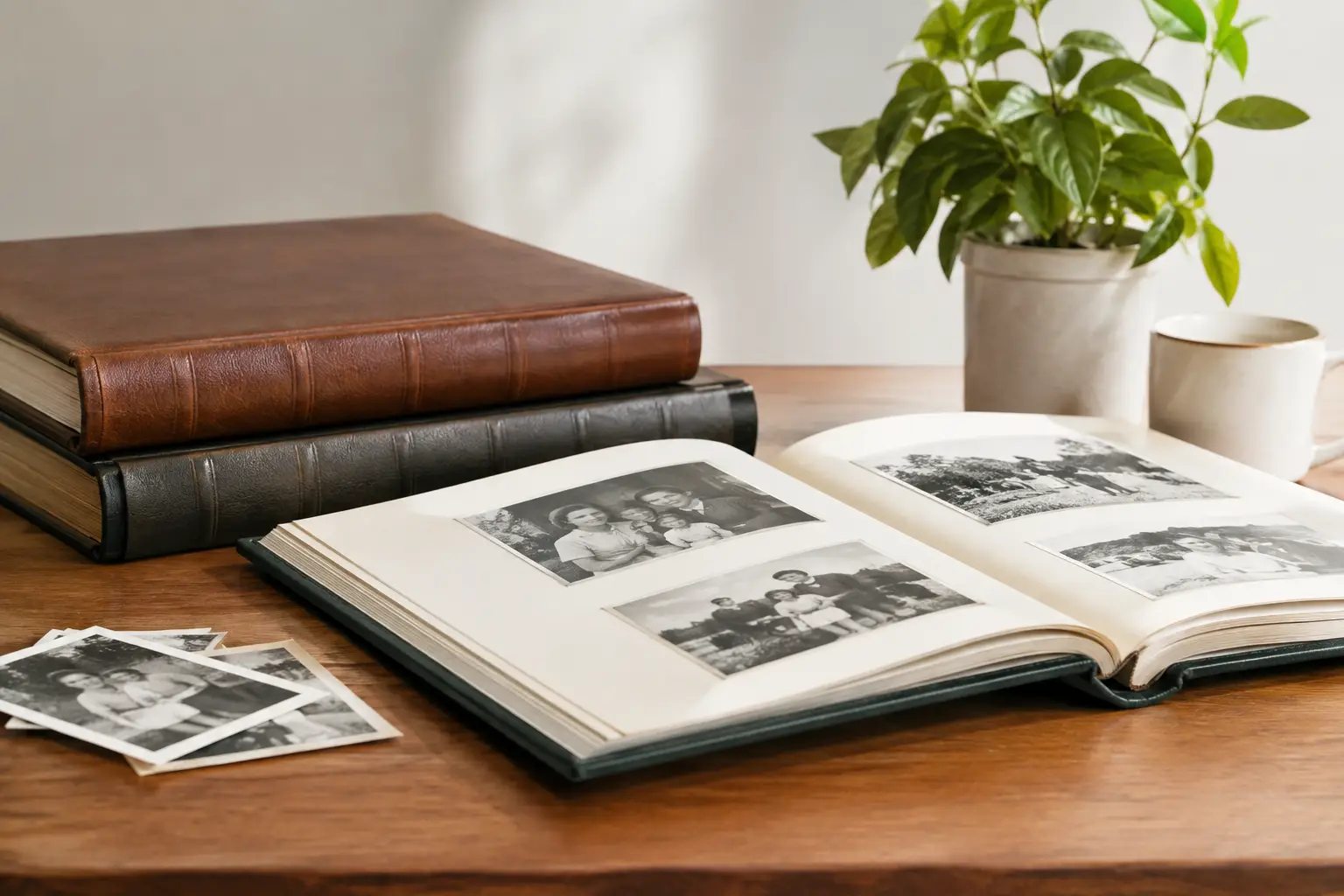
An heirloom family album is designed to last physically, but its real value lies in the memories it carries. It should feel considered enough to leave on a coffee table, sturdy enough to be enjoyed by small hands, and personal enough that your children will want to open it years from now.
That does not mean it needs every photograph from a session. Quite the opposite. A strong album is carefully edited, allowing each image room to breathe. When there are fewer photographs, chosen with care, the rhythm of the story becomes clearer. You notice the glance between parent and child, the tiny fingers wrapped around yours, and the expression that says far more than a formally arranged smile ever could.
Quality matters here. Professionally printed pages, archival inks and durable binding are made to withstand repeated viewing far better than a mass-produced photo book. The initial investment is higher, but so is the lifespan. An heirloom album is made for the family you are now and the family you will become.
Start with the story, not the best poses
The most meaningful albums have a sense of movement. They do not simply show who attended a shoot; they recall what it felt like to be together that day. Before choosing favourites, think about the story you want the album to hold.
For a family session, that might begin with a wider photograph of everyone together, then move into the quieter details: a child held high, muddy wellies, a beloved pet watching closely, siblings sharing an unexpected giggle. For a wedding, the album may travel from anticipation in the morning to the warmth of the dance floor, with the hugs, tears and in-between looks carrying as much weight as the key milestones.
It is tempting to choose every image where everyone is looking at the camera. Include one or two if they matter to you, of course. But do not overlook the photographs with movement and character. A child pulling a funny face or refusing to sit still may be exactly what brings that season of life rushing back in twenty years’ time.
Choose photographs with emotional variety
A well-balanced selection usually includes a mixture of wider scenes, natural portraits, close details and unscripted moments. The wider photographs establish place, whether that is a favourite stretch of the Scottish Borders, your garden or the familiar comfort of home. Closer images make the story intimate.
Try not to repeat near-identical images simply because each one is lovely. Instead, choose the frame that best carries the emotion. If several photographs show the same hug, select the one with the strongest connection rather than using them all. This makes the finished album feel calm and intentional.
Let the design feel timeless
Trends can be fun, but an album should still feel right when your children are grown. The safest route is often a clean, understated design that lets the photography lead. Generous white space, simple page layouts and a restrained colour palette give images the attention they deserve.
This does not mean the book must feel plain. A linen, leather or fabric cover can add warmth and character, while a debossed family name, date or short phrase makes it distinctly yours. Think about where the album will live, too. A soft neutral cover may sit beautifully in a light family room, while a deeper shade can feel wonderfully classic and practical in a busy household.
When choosing cover wording, keep it simple. A surname and year, a child’s name and age, or a phrase that means something to your family is often enough. You are creating a marker in time, not a formal record office.
Give the pages room to breathe
Crowded layouts can make even beautiful photographs feel hurried. Full-page spreads are especially effective for expressive portraits, landscape scenes and images with a strong sense of atmosphere. Smaller groupings work well for details and sequences, such as a child running towards a parent or the gradual arrival of a big smile.
A professional designer can guide this balance, spotting when an image needs its own page and when two photographs work better as a pair. This is one of the quiet advantages of creating an album through your photographer: the book is designed with the full gallery and the intended story in mind, rather than as a rushed task at the end of a long evening.
Select materials made for real family life
There is a practical question at the heart of any heirloom album: will it be enjoyed, or will it be kept safely out of reach? The best answer is somewhere in the middle. It should be special, but it should also be opened.
Look for archival-quality printing and pages with enough weight to turn comfortably. Lay-flat binding is a lovely choice for photographs that run across a full spread, because the image is not lost in the centre crease. Sturdy covers and protective boxes can help shield the album from sunlight, dust and the occasional sticky fingerprint.
There are trade-offs. A larger album gives photographs real impact and is ideal for a wedding or a major family chapter, but it needs more shelf space and can be less convenient for young children to handle. A smaller book feels intimate and is easy to share, though it naturally allows less space for larger images. Parent copies can be a thoughtful addition after a wedding or newborn session, especially for grandparents who have played such a meaningful role.
A guide to heirloom family albums that grows with you
Not every family album has to document a single photo session. Some of the most treasured books are made around a chapter: a baby’s first year, a child’s primary school years, a much-loved family home, or a collection of annual portraits. A recurring approach gives your family story a beautiful continuity.
If you are starting this tradition, avoid waiting for everything to be just right. Children grow, homes change, and family life is rarely as tidy as the photographs in a catalogue. That is precisely why it deserves to be recorded. A yearly session in a place that means something to you can become a gentle ritual, leaving you with albums that show not only how everyone looked, but how your relationships deepened over time.
For clients of Graeme Webb Photography, the album design process can be an opportunity to slow down and relive the photographs properly. Rather than wondering where to begin, you can talk through the images that mean the most and shape a finished piece that suits your home and family.
Care for it so it can be passed on
Even the finest album benefits from sensible care. Keep it out of direct sunlight and away from damp or extreme temperature changes. Store it flat or upright with support, rather than cramming it tightly between heavy books. Clean, dry hands are usually all that is needed before viewing, and a soft, dry cloth can remove surface dust from the cover.
Most importantly, use it. Let your children turn the pages with you. Tell them who is in the photographs, where you were and why you were laughing. The small stories shared while looking at an album are part of the heirloom too.
Years from now, the value will not be in the cover material alone, nor in whether every page was perfectly styled. It will be in the familiar faces, the ordinary details and the reminder that, for a little while, this was your wonderfully real life together.