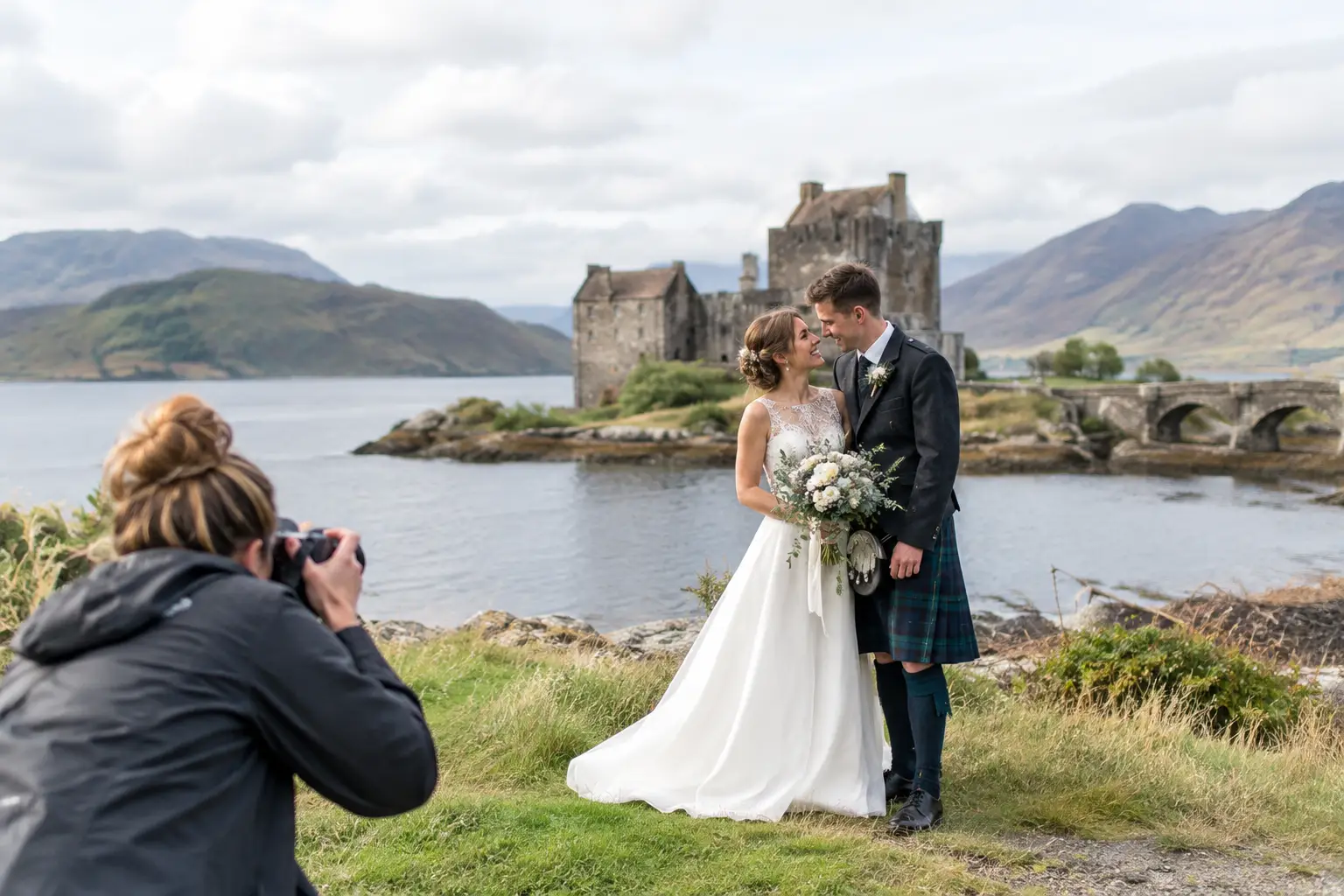
The rain has begun just as you are about to leave for the ceremony. Your guests are gathering, your flowers look beautiful, and someone is asking whether the group photographs can happen indoors. This is the point at which thoughtful planning makes all the difference. This Scottish wedding photography planning guide is here to help you protect the feeling of your day, whatever the weather chooses to do.
Your photographs should not become another thing to manage. With a little care before the wedding, they can reflect the laughter, nerves, happy tears and quiet moments that make the day unmistakably yours.
Begin with the feeling you want to remember
Before discussing shot lists or timings, consider how you want your wedding photographs to feel when you look at them years from now. Perhaps you picture a windswept walk across the grounds of a Borders venue, your gran laughing during the speeches, or a calm five minutes together after the ceremony. Those are the moments worth making room for.
A relaxed, story-led approach does not mean leaving everything to chance. It means planning the practical parts well enough that you can be present for the emotional ones. The best photographs often happen between the formal milestones: a reassuring squeeze of the hand, your friends fixing a buttonhole, children charging across the dancefloor, or the look you exchange when you finally sit down together.
When choosing a photographer, look beyond a handful of beautiful portraits. Ask whether their work shows real connection in changing light, lively rooms and imperfect weather. You want someone whose presence feels easy, who can offer gentle direction when it helps, and who knows when to step back.
Build a photography timeline with breathing room
A wedding timetable is not about turning your day into a production schedule. It is about giving each part of the day enough space that nobody has to rush through it. Rushing shows in photographs, especially during preparations and family group pictures.
Start by working backwards from the ceremony. Consider the travel time between locations, how long it takes to dress, and the moments you do not want to miss. Hair and make-up often runs a little later than expected, so allow a buffer rather than assuming every minute will run perfectly to plan.
Morning preparations
Preparation photographs work best when the room has light, space and a reasonably calm atmosphere. If possible, keep clutter to one side and have key details ready together: rings, stationery, perfume, jewellery, shoes and flowers. They are lovely parts of the story, but they should never take priority over the people in the room.
If you are getting ready at home or in a smaller room, that is absolutely fine. A skilled photographer can work thoughtfully in a compact space. It simply helps to choose one clear area near a window for the finishing touches, and to let your closest people know that they may be photographed naturally as the morning unfolds.
Ceremony, confetti and congratulations
After the ceremony, build in time for hugs. This is often one of the richest parts of the day photographically, yet it can disappear if guests are immediately moved on to the next thing. Fifteen or twenty unhurried minutes lets you greet the people who have come to celebrate with you.
For confetti, more is usually better than a light scattering. Ask guests to wait until you are both ready, then walk slowly and enjoy it. Biodegradable petals or confetti with a little movement photograph beautifully, particularly against Scotland’s often soft, changeable light.
Family photographs without the fuss
Formal group photographs matter. They become treasured records of the people who shared your day, particularly across generations. The key is to keep them focused.
Choose your essential combinations in advance, usually immediate family and a few meaningful wider groups. A list of around six to ten groups is often enough, though every family is different. Nominate a confident usher, sibling or friend who knows the key people. They can gather each group quickly while you remain with your photographer, rather than spending your drinks reception searching for an uncle who has wandered off to the bar.
Plan these photographs immediately after the ceremony, or before the meal if the light and venue layout make that more sensible. Your photographer can advise on the best order and location, especially where access, mobility or weather need consideration.
Plan for Scottish light and weather
Scotland offers remarkable wedding backdrops: moody skies, old stone buildings, rolling hills, walled gardens and wild coastlines. It also asks couples to be flexible. A grey forecast is not a failed forecast. Overcast light can be beautifully soft and flattering, while a passing shower can add atmosphere and bring everyone together under umbrellas.
Talk through a wet-weather plan with your venue and photographer. Look for indoor spaces with character: a staircase, drawing room, entranceway, covered archway or a bright window. A good backup is not second best. It is simply part of planning a Scottish wedding with confidence.
If you are happy to step outside for a few minutes in light rain or wind, tell your photographer. A pair of smart umbrellas and sensible footwear can make this far more comfortable. On the other hand, if staying dry matters most to you, that is equally valid. Your photographs should suit your day and your comfort, not someone else’s idea of what is dramatic.
Make time for the two of you
Many couples worry that portraits will mean being taken away from their guests for hours. They need not. A relaxed portrait session can take twenty minutes, sometimes split into two short walks, and it often becomes one of the only chances you have to pause together.
The most flattering time is often later in the day, when the light softens. In summer, that may be well after dinner; in winter, it may be shortly after the ceremony. Rather than fixing an exact minute months ahead, leave a flexible window and trust your photographer to spot the best opportunity.
You do not need to know how to pose. Simple prompts, a little movement and a chance to talk to one another are usually all that is required. The aim is not to make you look like somebody else. It is to make photographs that look and feel like you at your happiest.
Let your venue work for you
When visiting venues, look at them through the eyes of your wedding day rather than only on a sunny viewing appointment. Notice where guests will gather, whether the ceremony room has natural light, and where family groups could be photographed if it rains.
Beautiful locations are wonderful, but convenience matters too. If a spectacular viewpoint requires a long walk, steep ground or a complicated journey during your drinks reception, decide whether that trade-off feels worthwhile. Often, the strongest images are found close by, because you are relaxed and not watching the clock.
For churches, historic buildings and estates, check any photography restrictions early. Some venues have rules around flash, aisle positioning or time in particular rooms. Clear communication means there are no awkward surprises on the day.
Think beyond the digital gallery
Your photographs deserve a life outside a phone screen. Digital images are invaluable for sharing, but an album or framed print gives your memories a place in everyday life. The image of your dad seeing you ready for the first time, a rain-soaked laugh with your partner, or a busy dancefloor with every generation together becomes more meaningful when it is part of your home.
You do not have to choose every finished product before the wedding. In fact, many couples find it easier to decide once they have seen their story. What helps is considering what you may want to preserve: an album that tells the day from beginning to end, a piece of wall art for your home, or smaller prints for family members who will treasure them.
At Graeme Webb Photography, the focus is always on photographs that hold feeling as well as detail – images made to be revisited, displayed and passed on.
Share the details that matter
Your photographer does not need a minute-by-minute script, but a few personal notes are genuinely useful. Let them know about family dynamics, people who may find being photographed difficult, surprise moments, sentimental details and anyone especially important to you. This allows them to work with sensitivity and recognise a moment before it has passed.
A short list of must-have photographs is helpful when it identifies people or traditions that matter deeply. A long list copied from social media can have the opposite effect, pulling attention towards recreating images rather than noticing what is actually happening. Trust the photographer you chose for their eye, while being open about what matters most.
On the day, give yourselves permission to let go of perfection. The weather may change, a flower may go missing, and the timetable may bend. None of that will matter as much as the people around you and the way the day felt. Leave a little room to breathe, hold hands when things get busy, and let the photographs tell the honest, joyful story of your wedding.