Your wedding album will be handled on quiet Sunday mornings, passed around after dinner, and opened years from now by people who were not there to see the day unfold. That is why choosing the best wedding album cover materials is about more than matching a colour scheme. The cover is the first touchpoint of your story – it sets the tone before a single page is turned.
A beautiful album should feel as personal as the photographs inside it. For some couples, that means the character and heritage of leather. For others, a soft linen cover feels more like home, while velvet brings a little of the romance and occasion of the wedding day itself. There is no single right choice, but there is usually one that feels unmistakably like you.
What makes a wedding album cover worth choosing carefully?
A wedding album is not a screen you scroll past. It is a physical piece of your family history, made to hold the look on your partner’s face during the ceremony, the hugs from people you love, the wind catching your veil and all the smaller moments that might otherwise blur with time.
The cover needs to suit both your taste and the life the album will lead. Think about where it will be kept, how often you expect to open it, whether you have young children with curious hands, and the style of your home. A material can look beautiful in a sample box but feel less appropriate once you imagine it on your coffee table or shelf for the next few decades.
Durability matters, certainly, but it need not mean choosing something overly formal or practical-looking. The finest covers combine lasting quality with a texture and finish that invites you to pick the album up.
The best wedding album cover materials to consider
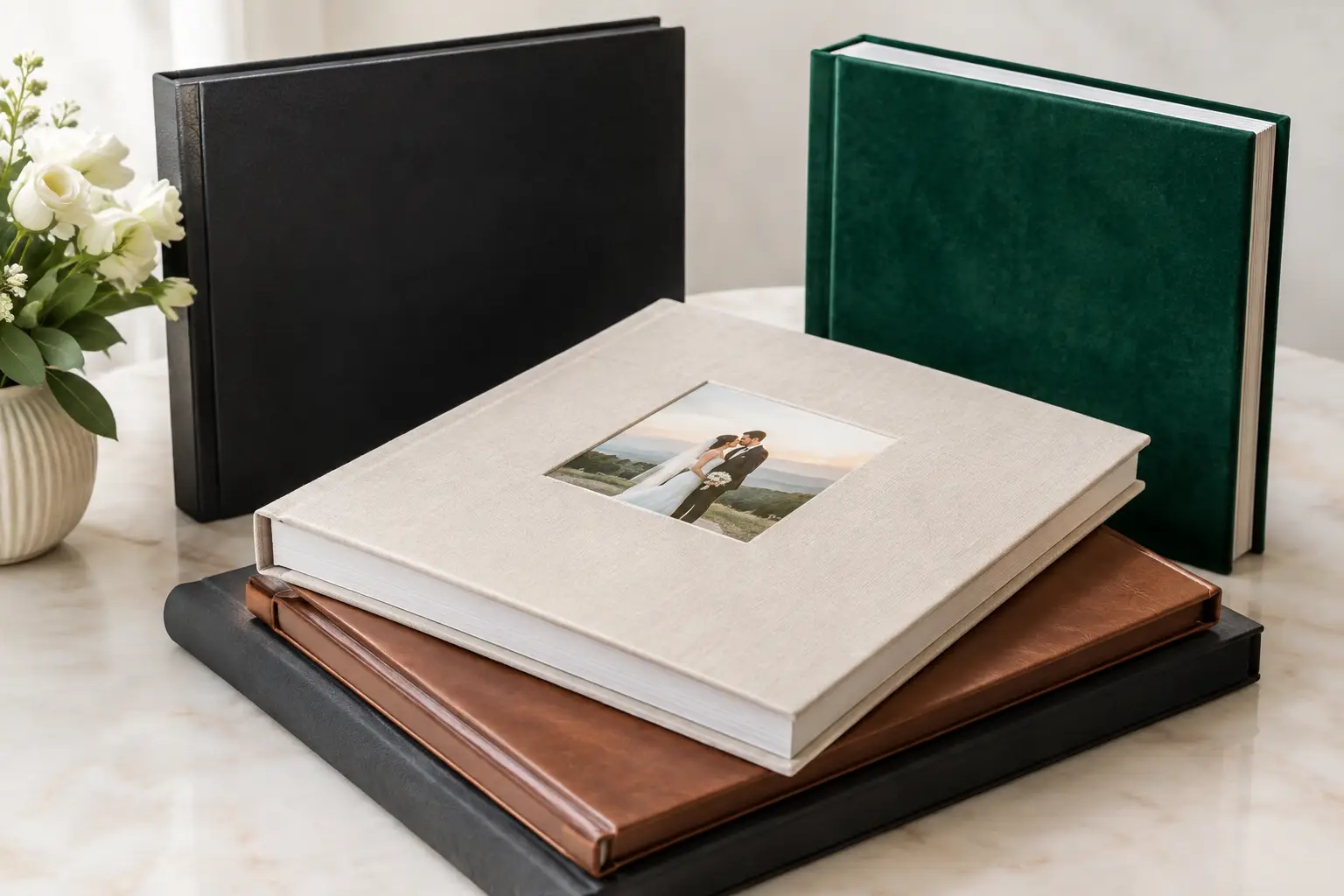
Leather: timeless, tactile and full of character
Leather has long been a favourite for wedding albums, and for good reason. It has a natural richness that suits a once-in-a-lifetime story, whether your celebration was a grand country house wedding, an elegant Edinburgh gathering or a relaxed day in the Borders.
A quality leather cover feels substantial in the hand and develops character over time. Small marks and softening are often part of its charm rather than a flaw, giving the album a lived-in quality that can make it feel even more personal as the years pass. It works particularly well if you are drawn to warm neutrals, deep greens, rich browns, charcoal or classic black.
Leather is also a sensible choice for an album that will be opened often. It is generally hard-wearing, although it is still worth treating it with care and keeping it away from direct sunlight, moisture and sharp objects. If you prefer a lighter, more contemporary wedding aesthetic, however, leather may feel a little weightier than you want.
Linen: relaxed elegance with a natural feel
Linen is a lovely fit for couples who want something refined without being overly formal. Its woven texture gives an album a gentle, tactile quality, and its understated finish lets the photographs take centre stage.
It suits relaxed, natural photography especially well – the sort of images full of real laughter, muddy hems, windswept portraits and the beautiful in-between moments that tell the honest story of a wedding day. Soft stone, oat, sage, pale blue and warm grey linen covers can sit beautifully in a home without feeling like a display piece that must be handled with caution.
The trade-off is that lighter fabrics can be more susceptible to marks, particularly around the edges. That does not make linen unsuitable for a family album, but it may influence your colour choice. A mid-tone linen often offers the best balance between its airy, organic look and everyday practicality.
Velvet or suede: soft, romantic and made for occasion
Velvet and suede-style covers bring texture in a different way. They feel soft, luxurious and quietly indulgent – ideal if your wedding had a romantic, fashion-led or richly styled feel. Deep berry, forest green, navy and dusky rose shades can look particularly striking, while softer neutrals offer a more delicate finish.
These materials have a presence that is hard to ignore. A velvet album resting on a shelf feels special before you have even opened it, making it a wonderful choice for couples who see their album as a statement heirloom.
They do require a little more thought when it comes to care. Velvet can show pressure marks or pick up lint, and pale shades may not be the best choice if the album will be regularly handled by little ones. For an album kept in its presentation box and brought out for meaningful occasions, though, this is rarely a concern. The pleasure of the material can more than outweigh the extra care it asks for.
Photo covers: personal from the very first glance
A photographic cover places one of your favourite images directly on the front of the album. It may be a wide landscape portrait, a close moment from the ceremony or a joyful scene that immediately takes you back to the day.
This option is wonderfully direct. You do not need to explain what the album is or wait until the first spread to feel something – the cover does that work straight away. It can be especially fitting for couples who love a clean, contemporary look, or whose wedding photographs feature a particularly strong sense of place, from the rolling Borders landscape to an atmospheric city setting.
The key is choosing the right image. Not every beautiful photograph works as a cover. It needs enough space for any title or embossing, should still read well when cropped, and needs to suit the shape of the album. A skilled album designer can help you avoid forcing a favourite image into a role it was not made for.
Wood and alternative finishes: distinctive but considered
Wooden covers, acrylic panels and other alternative finishes can create a distinctive look. Wood brings warmth and craftsmanship, often complementing rustic celebrations, outdoor weddings and venues with plenty of natural texture. Acrylic or glass-like covers can feel modern and polished, with a sleek finish that suits a more contemporary celebration.
These options are often best when they genuinely connect to the wedding rather than being chosen simply because they are different. A wood cover can be perfect for a woodland ceremony or a barn celebration, but may feel out of step with a candlelit ballroom wedding. Likewise, an acrylic cover may beautifully echo a modern city venue but be less suited to a soft, heritage-led aesthetic.
Let your wedding day guide the choice
Your album cover does not need to match every detail of your wedding stationery, flowers or table settings. Trends move on, and your album should still feel right when those details belong to another chapter. Instead, look for the deeper thread in your day.
Was it effortless and outdoorsy? Linen or wood may feel natural. Was it elegant, classic and intimate? Leather could be the right fit. Did you lean into colour, texture and romance? Velvet might reflect that feeling best. If your photographs are central to the visual style, a photo cover can make a confident, personal choice.
It is also worth considering the album’s size. Larger albums can carry bold materials and deeper colours beautifully, while a smaller parent album may suit a lighter linen or a simpler cover design. Parent albums do not need to be identical to your own, either. Choosing a coordinated material in a different colour can make each one feel considered and individual.
Colour, embossing and the details that make it yours
Once you have chosen a material, the finishing details bring the design together. A simple title with your names and wedding date is often all that is needed. Blind embossing, where the text is pressed into the cover without colour, feels subtle and timeless. Foil lettering in gold, silver or copper can add a little warmth and celebration, particularly against darker fabrics or leather.
Restraint tends to age well. The photographs already hold the emotion, so the cover does not need to tell the whole story at once. A beautifully chosen texture, a considered colour and a small personal detail are usually more powerful than an elaborate design.
At Graeme Webb Photography, the aim is always to create an album that feels like a natural continuation of your wedding photographs: honest, beautifully made and entirely yours. Seeing samples in person can make the decision much easier, because a cover material is something you understand best by holding it in your hands.
Choose the cover that makes you want to open the album. Years from now, that small instinctive pull will matter far more than whether it followed a passing trend.