A business headshot is often the first small introduction someone has to you. It may sit beside your biography, appear on LinkedIn, introduce your team on a website or accompany a proposal before you ever get the chance to shake a hand. Knowing how to prepare business headshots means you can arrive feeling like yourself, rather than like someone dressed up for a role you do not recognise.
The best professional portraits do more than prove you were in the room. They communicate approachability, confidence and care. That does not require a forced grin or a stiff pose. A little thoughtful preparation gives your photographer the space to create an image that feels polished while still being unmistakably you.
Start with the message you want your headshot to send
Before thinking about shirts, hair or make-up, consider where the image will be used and who needs to connect with it. A solicitor, therapist, estate agent and creative business owner may all need a professional headshot, but they do not necessarily need the same kind of portrait.
Ask yourself how you would like a new client to feel when they see your photograph. Reassured? Energised? Able to trust you? The answer helps shape everything from the setting to your expression. If your work is personal and client-facing, warmth may matter more than looking overly corporate. If you lead a larger organisation, a clean, confident and considered image may better reflect your role.
It is also worth deciding whether you need one versatile portrait or a small selection. A close, straightforward headshot works brilliantly for profile images, while a slightly wider environmental portrait can give your website and social media more personality. Sharing these intended uses before the session helps your photographer plan with purpose.
How to prepare business headshots with the right clothing
Wear something that feels like a slightly more refined version of what you would choose for an excellent working day. If you never wear a suit, buying one purely for the photograph can leave you looking uncomfortable. Equally, if a jacket is part of how clients know you, it makes sense to include it.
Plain, mid-tone colours tend to photograph beautifully. Navy, charcoal, forest green, burgundy, soft blue and warm neutrals usually keep the attention on your face. Very bright white can sometimes dominate the frame, while deep black may lose detail depending on the lighting and background. Neither is automatically wrong, but both benefit from a little consideration.
Avoid prominent logos, large lettering, busy prints and fine stripes. They can pull the eye away from your expression and may date the photograph more quickly than a simple, well-fitting outfit. Texture is often a better choice than pattern: a knit, wool jacket, linen shirt or softly structured blouse can add interest without becoming distracting.
Bring a second option if time allows. A change of jacket, top or blouse can create useful variety without making the session feel overcomplicated. Think about necklines too. Choose one that sits comfortably and does not need constant adjusting. If you are likely to tug at it, it will be hard to forget it is there.
For team headshots, consistency is helpful, but identical outfits are rarely necessary. Agreeing a loose palette or level of formality creates a cohesive look while allowing each person to retain some individuality.
Check the small details the day before
Give your clothing a proper try-on in daylight. Check for creases, loose threads, pet hair, marks and buttons that do not sit neatly. Steam or press garments ahead of time, then transport them carefully if you are changing at the studio or workplace.
Glasses are absolutely fine, and often an essential part of how people know you. Clean the lenses thoroughly and, if possible, let your photographer know you will be wearing them. Reflections can usually be managed with careful lighting and positioning. If you own a pair with an anti-reflective coating, they can make the process a little easier, though there is no need to buy new frames for one session.
Grooming should help you feel comfortable, not disguised
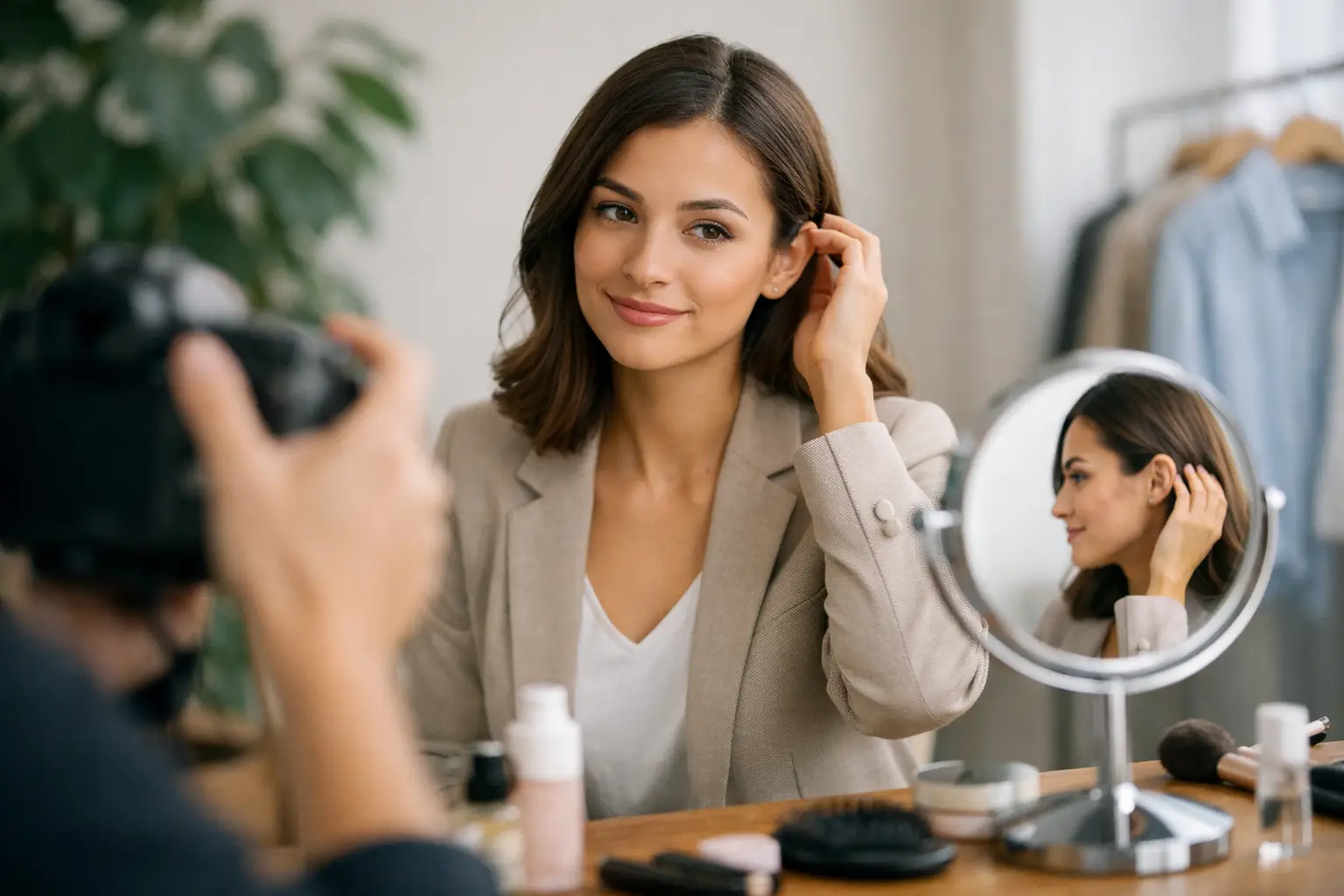
Aim for fresh and familiar. A headshot is not the ideal moment to experiment with a dramatic new haircut, a different beard shape or make-up you have never worn before. Arrange haircuts or colour appointments a few days beforehand so everything has time to settle naturally.
If you wear make-up, choose a finish that looks like you on a particularly good day. A little more definition than you wear day to day can be helpful under professional lighting, but heavy contouring or very shiny products may not reflect how clients meet you in real life. Blotting papers or a little translucent powder can be useful for reducing shine just before photographs begin.
For facial hair, tidy edges and moisturised skin go a long way. There is no need to chase perfection – real skin has texture, and a good portrait should not make you look airbrushed into a different person. Let your photographer know if there is anything you feel particularly self-conscious about. The conversation is confidential, and it allows for kinder choices in lighting, angle and retouching.
Give yourself enough time to arrive settled
Rushing from a difficult meeting, a long drive or the school run directly into a headshot session can leave anyone feeling flustered. Where possible, allow an extra ten or fifteen minutes. Have some water, take a breath and give yourself time to change or check your appearance without pressure.
Try not to book a major appointment immediately beforehand, particularly one that can leave marks on your skin or make you feel unlike yourself. If your session is at your workplace, choose a quiet, uncluttered area and let colleagues know you need a short period without interruption. A calm start shows in the photographs far more than most people expect.
Sleep helps, of course, but do not panic over one restless night. The goal is not to arrive looking flawless. It is to arrive present. A photographer can guide the pace, adjust the light and help you settle into the moment, but you will find it easier to relax if you have not made the day unnecessarily hectic.
You do not need to know how to pose
Most people say they are not comfortable in front of the camera. That is not a failing, and it is certainly not unusual. Your job is not to perform a catalogue of poses. Your job is simply to be open to small direction: turning your shoulders slightly, shifting your weight, looking just beside the lens, or pausing between expressions.
A natural headshot is usually built in those quiet moments after you stop trying too hard. Rather than holding a permanent smile, let your expression move. Think of a person you genuinely enjoy working with, or of the conversation you would have with a new client sitting opposite you. That thought often brings a more believable warmth to your face than the instruction to “say cheese” ever could.
If you are worried about a particular angle, mention it at the beginning. An experienced photographer will not make you feel vain for asking. Small adjustments to camera height, posture and lighting can make a significant difference, and it is far better to have a wee chat than carry the worry through the session.
Trust the process, then choose with care
Do not judge every image from a quick glance at the back of the camera. A good headshot is about the whole frame – expression, posture, light and the way it feels – not whether one tiny detail is exactly as you expected. When you view your final selection, consider which image looks most like the version of you that clients meet at your best.
At Graeme Webb Photography, the aim is never to turn people into stiff corporate cut-outs. It is to create professional portraits with enough warmth and honesty to begin a real connection.
Your headshot does not need to be perfect to work hard for your business. It simply needs to look like someone people would feel good about contacting – capable, considered and ready to listen.